


Driveway pressure washing removes embedded dirt, algae, tire marks, and surface stains while restoring a cleaner, brighter appearance. Professional cleaning also helps protect concrete by reducing buildup that can trap moisture and make the surface slippery.
Costs depend on driveway size, stain severity, surface condition, access, and the cleaning method required. Most homeowners can expect noticeable visual improvement after one service, although deep oil, rust, or chemical stains may need specialized treatment.
Understanding price, timing, maintenance frequency, and realistic outcomes helps you decide when professional pressure washing is worthwhile and timely.
How Much Does Driveway Pressure Washing Cost?
The cost of driveway pressure washing depends mainly on square footage, surface condition, stain type, and access. Larger driveways require more water, labor, cleaning solution, and operating time.
A short single-car driveway usually costs less than a wide circular driveway, long private lane, or heavily stained commercial entrance.
Factors That Influence Pricing
Contractors may price the job by square foot, by project, or through a minimum service charge. Rates vary because no two driveways have the same condition.
Common cost factors include:
- Total concrete or paver area
- Oil, rust, algae, or tire stains
- Steep slopes or difficult access
- Nearby walls, landscaping, or vehicles
- Hot-water or chemical treatment needs
- Sealing or post-cleaning services
Deep stains may require pretreatment and repeated passes. That increases labor compared with washing loose dirt.
Homeowners should request a written estimate that explains the cleaning scope. The lowest price may not include stain treatment, edging, rinsing, or protection for nearby areas.
Professional driveway cleaning services should clarify what results are realistic before work begins.
Is Pressure Washing A Driveway Worth It?
Pressure washing a driveway is worthwhile when dirt, algae, stains, and discoloration make the surface look neglected or unsafe. It can produce a major improvement without replacing the concrete.
Benefits Beyond Appearance
Algae and organic buildup can create slippery areas, especially on shaded concrete. Removing that film improves traction and reduces a common outdoor hazard.
Cleaning also prepares concrete for sealing, repairs, or stain applications. Sealers adhere better when dirt and residue have been removed correctly.
For many properties, the cost is modest compared with resurfacing or replacement. This makes professional concrete cleaning a practical maintenance option before larger repairs become necessary.
Can Pressure Washing Remove Oil Stains From Concrete?
Pressure washing can reduce or remove many oil stains, but results depend on the stain’s age, depth, and chemical composition. Fresh oil is usually easier to treat than oil that has soaked into porous concrete for months.
Water pressure alone may not fully remove petroleum residue.
How Professionals Treat Oil Stains
Technicians often begin with an oil-specific degreaser. The product breaks down residue so it can be lifted from the surface.
Agitation may be used to work the cleaner into the concrete. Hot water can improve results because heat helps loosen grease and oil.
Older stains may leave a shadow even after thorough treatment. Concrete absorbs liquids below the visible surface, so complete removal cannot always be guaranteed.
Homeowners should avoid pouring harsh chemicals on the driveway without understanding how they react with concrete, nearby grass, drains, or sealers.
A professional can identify whether the mark is oil, rust, transmission fluid, paint, or another substance. Correct identification prevents wasted effort and surface damage.
How Long Does Driveway Pressure Washing Take?
Most residential driveway pressure washing jobs take between one and three hours. The exact time depends on size, staining, equipment, preparation, and drying conditions.
A lightly soiled single-car driveway can be completed quickly. A large driveway with oil, algae, and heavy traffic residue requires more time.
What Happens During The Service
The technician first clears the area and checks for cracks, loose material, damaged joints, and drainage concerns.
Nearby doors, walls, vehicles, plants, and electrical features may need protection.
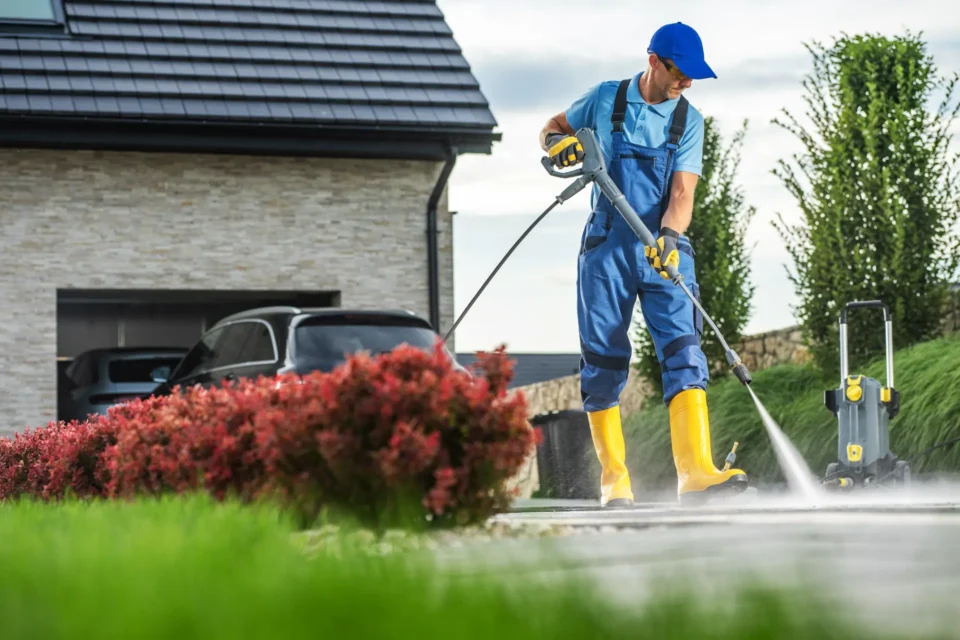
Pretreatment is applied where stains or organic growth are present. The driveway is then cleaned using a surface cleaner or controlled pressure.
The final rinse removes loosened dirt and cleaning solution. Additional stain treatment may follow if marks remain.
Drying time is separate from active cleaning time. Concrete may look darker while wet, so final results are easier to judge after it dries.
Weather, shade, humidity, and temperature affect drying. Most driveways can be used carefully once the surface is no longer slick.
How Often Should A Driveway Be Pressure Washed?
Most driveways should be pressure washed every one to two years. Properties with heavy shade, frequent vehicle traffic, trees, irrigation overspray, or humid conditions may need annual cleaning.
Signs It Is Time To Clean
Schedule service when the concrete develops dark patches, green growth, visible tire marks, slippery sections, or broad discoloration.
Oil and rust stains should be treated sooner. Waiting allows them to penetrate more deeply and become harder to remove.
Driveways near busy roads often collect soot, dust, and road film faster. Homes with mature trees may experience leaf tannins, sap, pollen, and organic staining.
Overcleaning can also be a problem if excessive pressure is used repeatedly. Concrete should be cleaned with the lowest effective pressure and suitable equipment.
Professionals often use surface cleaners because they distribute water more evenly than a narrow wand. This reduces streaks and limits concentrated damage. Understanding how pressure washing systems clean beyond the surface can also help explain why equipment and technique matter.
Will Pressure Washing Improve Curb Appeal?
Yes, pressure washing can improve curb appeal by removing the dull film that makes concrete look older and poorly maintained. The driveway is one of the largest visible exterior surfaces on many properties.
Why The Driveway Affects First Impressions
Visitors often see the driveway before the front door. Dark streaks, oil spots, algae, and tire marks can influence how they judge the entire property.
Cleaning creates a more consistent appearance across the front exterior. It can also make nearby patios, sidewalks, and steps look cleaner when those surfaces are washed at the same time.
For homeowners preparing to sell, cleaning may help photographs look better and make the entrance feel maintained. Research into how dirty driveways impact property appraisals also highlights why driveway condition can influence the way a property is perceived.
Professional driveway pressure washing in Rock Hill, SC can address local buildup caused by humidity, pollen, shade, and seasonal growth.
Pressure washing can also support a broader curb appeal improvement by helping exterior surfaces look cleaner and better maintained.
What Results Can I Expect After Driveway Cleaning?
You can expect the driveway to look brighter, cleaner, and more uniform after professional washing. Loose dirt, algae, mildew, surface grime, and many tire marks should be removed.
Results Pressure Washing Cannot Guarantee
Deep oil, rust, fertilizer, paint, and chemical stains may not disappear completely. They often improve, but some discoloration can remain below the surface.
Pressure washing also cannot repair cracks, pitting, scaling, or erosion. Cleaning may make these defects more visible once dirt is removed.
After cleaning, allow the concrete to dry fully before evaluating the result. Wet areas look darker and may hide the true finish.
Homeowners may consider sealing after cleaning if the concrete is suitable. A quality sealer can reduce moisture absorption and make future maintenance easier.
Key Takeaways
Driveway pressure washing improves appearance, removes slippery buildup, and prepares concrete for sealing or repairs. Cost depends on size, access, stain severity, and treatment requirements.
Most residential jobs take one to three hours, while drying requires additional time. Annual or biennial cleaning is usually sufficient, although shaded or heavily used driveways may need service sooner. Oil, rust, and chemical stains may improve without disappearing completely.
Professional cleaning offers the best results when technicians use suitable products, even equipment, and realistic expectations for the concrete’s age and existing surface condition today.
Give Your Driveway A Cleaner Start With Power Clean
Power Clean Pressure Washing provides careful driveway cleaning based on the surface condition, stain type, drainage, and surrounding property.
The team uses appropriate pretreatment, controlled pressure, and even cleaning patterns to reduce streaks and avoid unnecessary damage.
A professional assessment can determine whether your driveway needs standard washing, stain treatment, or additional care.
Scheduling service before buildup becomes severe can improve appearance, reduce slippery growth, and support easier maintenance throughout the year.