

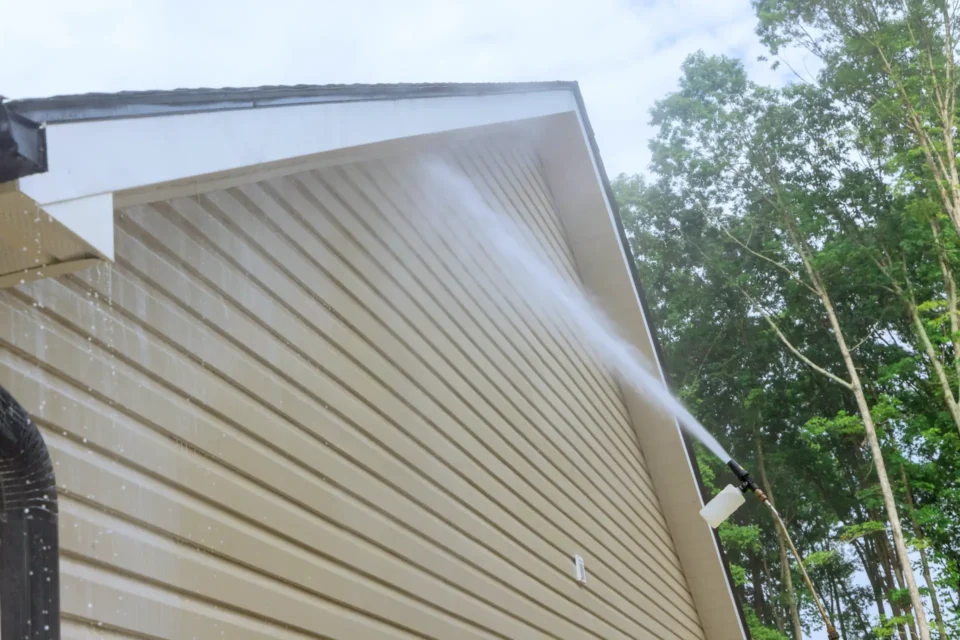
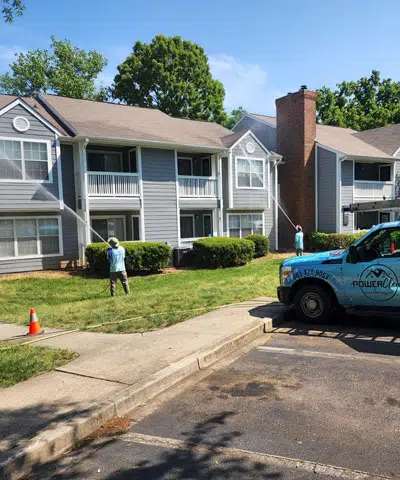
Vinyl siding can be pressure washed safely when low pressure, proper distance, and a wide spray pattern are used. High pressure can crack panels, loosen seams, strip oxidation, or force water behind the siding. For many homes, a professional house washing service uses the appropriate technique based on the siding’s condition.
Use Controlled Pressure
The operator should begin with the lowest effective setting and test a small area. The spray should move in a steady pattern rather than remain focused on one spot.
Water should generally be directed downward or straight across the surface. Spraying upward can push moisture behind panels, around vents, or beneath trim.
Account For Age And Condition
Older siding may be brittle, faded, loose, or oxidized. These conditions may call for soft washing.
Loose panels, open seams, damaged caulk, and cracked trim should be repaired before cleaning. Electrical fixtures also require protection.
A professional inspection helps determine whether the siding belongs among the safe pressure washing surfaces or needs a gentler cleaning method. Homeowners can also learn more about how exterior cleaning protects paint and siding.
Is Pressure Washing Safe For Concrete Driveways And Sidewalks?
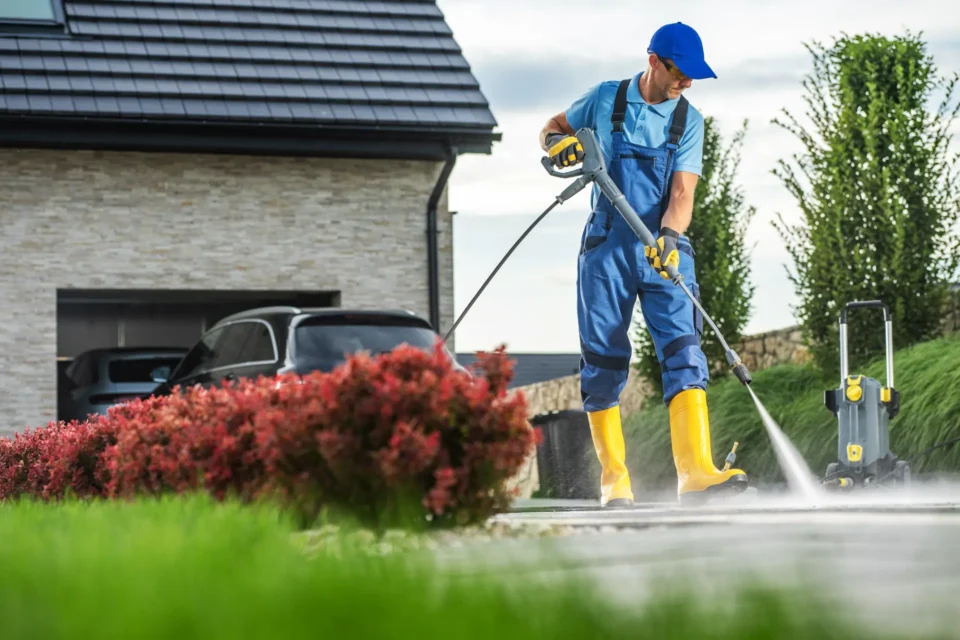
Concrete driveways and sidewalks are generally safe to pressure wash because they are dense and durable. Excessive pressure can etch surfaces or worsen weak areas.
Match Pressure To Concrete Condition
New concrete should not be pressure washed too soon. The surface needs adequate curing before aggressive cleaning.
Older concrete should be checked for scaling, spalling, cracks, damaged joints, and loose patches. Weakened surfaces may need reduced pressure and targeted treatment.
Pretreat Difficult Stains
Oil, rust, algae, and tire marks often need pretreatment. Pressure alone may only lighten deep stains.
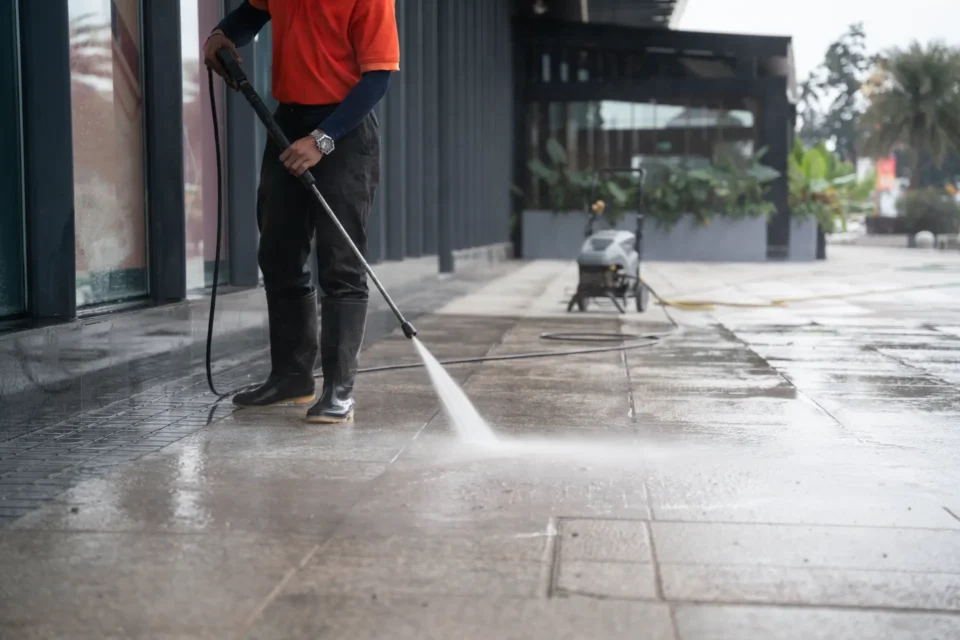
A surface cleaner can produce more even results than a narrow spray wand. It reduces streaks across broad areas.
Proper drainage also matters. Wash water should not be directed toward foundations, garages, storm drains, or neighboring properties without planning.
Contractors should also inspect expansion joints, nearby walls, decorative borders, and drainage channels because concentrated spray can loosen weak material or redirect contaminated runoff unexpectedly. Property owners dealing with stubborn driveway discoloration may also find value in reading about how dirty driveways impact property appraisals.
Can You Pressure Wash Wood Decks And Fences?
Wood decks and fences require careful pressure washing. Weathered wood can splinter under excessive force.
Use Lower Pressure
Wood should be cleaned with lower pressure than concrete. A wide fan nozzle and consistent distance help reduce visible lines and fiber damage.
The operator should follow the grain. Uneven movement can leave permanent marks that become more visible after staining.
Consider The Finish
Painted, stained, and sealed wood may react differently. High pressure can strip coatings, lift paint, or create uneven color.
Controlled washing may prepare wood for refinishing. The wood still needs enough drying time before stain or sealer is applied.
Rotten boards, loose fasteners, raised nails, and unstable railings should be repaired first. Cleaning cannot restore wood that has already lost structural strength. Homeowners planning maintenance can benefit from professional deck cleaning and fence cleaning when appropriate.
What Surfaces Should Never Be Pressure Washed?
Some surfaces should not be cleaned with direct high pressure because the risk of damage is too high. These materials require gentler cleaning methods.
Asphalt Roof Shingles
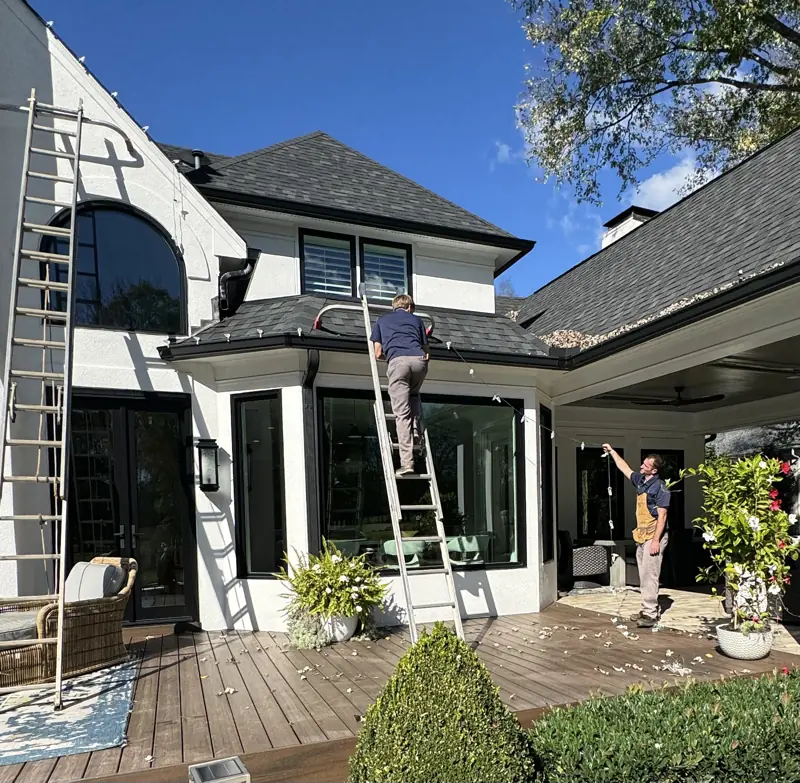
High pressure can remove protective granules, lift shingle edges, and shorten roof life. Roof cleaning should use a low-pressure process designed for roofing materials. Learn more about professional roof cleaning methods that protect roofing materials.
Lead-Based Paint
Older painted surfaces may contain lead. Pressure washing can scatter contaminated chips and residue across the property.
Lead-safe procedures are necessary before disturbing these coatings.
Electrical Components
Meters, outlets, service panels, outdoor lighting, cameras, and electrical connections should never receive direct pressure. Water can enter components and create serious safety hazards.
Fragile Masonry And Stucco
Deteriorated mortar, soft brick, damaged stucco, and historic masonry can erode under force. A careful inspection is needed before cleaning.
Screens, outdoor fabrics, and loose decorations need protection.
Is Soft Washing Better Than Pressure Washing For Certain Materials?
Soft washing is better for surfaces that can be damaged by strong water pressure. It uses low-pressure application combined with cleaning solutions that loosen mold, algae, mildew, and organic stains.
Materials That Benefit From Soft Washing
Vinyl siding, painted siding, stucco, roof shingles, some brick, and delicate trim often respond well to soft washing. The solution performs most of the cleaning while water provides a controlled rinse.
This reduces cracking, stripping, etching, and water intrusion.
Cleaning Solutions Must Be Managed Carefully
Soft washing still requires care. Wrong concentrations can discolor materials or damage plants.
Landscaping should be pre-wet, covered when appropriate, and rinsed during and after service. Runoff should also be controlled.
Experienced pressure washing services in Rock Hill, SC should evaluate the material and staining before selecting soft washing or traditional pressure cleaning. Those interested in the process can also explore how microorganisms react to low-pressure treatments.
Can Roof Shingles Be Pressure Washed?
Roof shingles should not be cleaned with conventional high-pressure equipment. The force can remove granules, break seals, loosen shingles, and push water beneath the roofing system.
Dark roof streaks are often caused by algae rather than ordinary dirt. A roof-safe soft-washing solution can treat the growth without relying on damaging pressure.
Why Granules Matter
Granules protect asphalt shingles from sunlight and weather exposure. Removing them can accelerate deterioration and reduce the roof’s expected service life.
Roof Access Adds Risk
Roof cleaning involves fall hazards and fragile components. Improper access can damage shingles or flashing.
A professional should inspect the roof, choose an appropriate solution, and protect gutters, siding, landscaping, and nearby surfaces during treatment. For additional insights, see Roof Cleaning: How a Clean Roof Quietly Adds Years to Your Home’s Life.
Other roofing systems have specific cleaning requirements. The process depends on age, coating, slope, and manufacturer guidance.
Can Pressure Washing Damage Windows Or Painted Surfaces?
Pressure washing can damage windows and painted surfaces when water is applied too closely, at the wrong angle, or with excessive force.
Risks Around Windows
High pressure may break seals, damage screens, loosen glazing, or force water into frames and walls. Older windows are more vulnerable.
The spray should not be aimed directly at seals, gaps, or damaged caulk. Screens may need removal before cleaning.
Risks To Paint
Loose, chalking, or poorly bonded paint can peel during washing. Even sound paint may become streaked or etched under concentrated pressure.
Before cleaning, the surface should be checked for bubbling, cracking, exposed wood, and failed caulk. Painted areas often require soft washing and gentle rinsing.
Nearby fixtures and decorative elements should be protected. Careful preparation reduces accidental damage and helps create a more even result.
Key Takeaways
Concrete, vinyl siding, selected wood surfaces, brick, and durable fencing can often be pressure washed safely when pressure and technique match the material. Roof shingles, electrical components, fragile masonry, old paint, windows, and weakened surfaces need gentler treatment or specialized cleaning. Soft washing is usually better for delicate exteriors and organic growth. Surface age, coatings, cracks, seals, and nearby landscaping should be evaluated before work begins. Professional cleaning reduces the risk of water intrusion, etching, splintering, peeling paint, and unnecessary damage across the property during routine exterior maintenance work overall.
Protect Every Surface With The Right Cleaning Plan
Power Clean Pressure Washing evaluates each material before choosing a cleaning method. The team considers surface condition, age, coatings, stains, drainage, landscaping, and nearby fixtures to determine whether pressure washing or soft washing is more appropriate.
Homeowners seeking dependable pressure washing services in Rock Hill, SC can benefit from an approach that treats concrete, siding, decks, fences, walkways, and delicate surfaces according to their specific needs. Careful pressure control and proper preparation help protect the property while improving its appearance.
A professional assessment can identify vulnerable areas before cleaning begins and create a practical plan for safer, more consistent exterior maintenance.