
Ever notice how parking lots feel more chaotic in winter?
Snow piles up, lines fade, and suddenly everyone’s guessing where to drive or park. For busy commercial lots, that confusion can turn into safety risks fast.
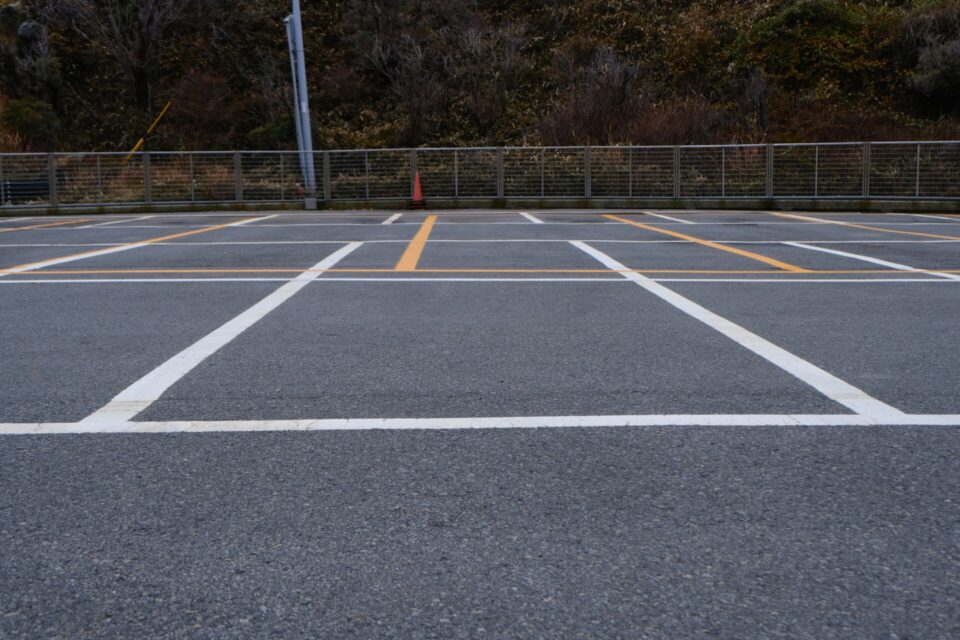
Line striping plays a bigger role this time of year than most people think. Fresh, visible markings help shoppers move safely, drivers stay organized, and businesses avoid unnecessary accidents.
When days are shorter and lots are packed, clear striping keeps things flowing the way they should. It’s a simple detail that makes a big difference. Seasonal line striping helps prepare your property for snow, heavy traffic, and everything winter brings with it.
Why is Line Striping Important For Commercial Parking Lots During Winter Months?
Winter has a way of stripping parking lots down to their essentials. Snow covers surface textures. Ice removes traction. Darkness arrives earlier. And suddenly, the only thing guiding drivers and pedestrians is contrast and clarity.
That’s where line striping steps in.
Clear, visible pavement markings provide structure when the environment feels chaotic. They tell drivers where to go, where to stop, and where not to park, even when snow partially covers the ground.
During winter months, line striping matters more because:
- Snow reduces natural visual cues like curbs and pavement edges
- Drivers rely on markings when depth perception is limited
- Plow activity scrapes away old paint, making fresh striping essential
- Shorter days mean more driving in low-light conditions
A parking lot without clear striping in winter feels like a guessing game. And people don’t make great decisions when they’re guessing, especially in cold, stressful conditions.
Well-maintained line striping isn’t just maintenance. It’s a signal. It tells customers and tenants that the property is actively managed and safety is taken seriously year-round, not just when conditions are ideal.
How Does Snow Affect Parking Lot Visibility and Traffic Flow?
Snow changes how people see and move through space.
Once snowfall begins, parking lots lose definition. Snow blends asphalt, curbs, and islands into one flat, white surface. Drivers can’t easily tell where lanes begin or end. Traffic patterns that normally flow smoothly suddenly feel cramped and confusing.
This is where traffic flow starts to break down.
Snow affects parking lot visibility and movement in several ways:
- Lane boundaries disappear, causing wider turns and awkward stops
- Drivers park off-center when stall lines are hard to see
- Emergency access routes become unclear
- Directional arrows fade into the background
When markings are already worn before winter hits, snow finishes the job. That’s when minor confusion turns into congestion, fender benders, and frustrated customers circling longer than they should.
This is also why faded parking lot lines can affect customer experience long before they become completely invisible. If drivers struggle to find spaces or understand traffic patterns, the property can feel frustrating and poorly organized from the moment they arrive.
Clear, high-contrast line striping helps restore order. Even when partially covered, fresh markings are more likely to remain visible through light snow and slush. They act as visual anchors, giving drivers something to reference when everything else blends together.
Traffic flow in winter depends less on speed limits and signage and more on how intuitive the pavement layout feels under pressure. Line striping does that heavy lifting quietly but effectively.
What Role Does Line Striping Play in Pedestrian Safety During Seasonal Weather Changes?
Pedestrian safety is where winter conditions and poor striping collide the hardest.
People walk differently in winter. They look down more. They rush between warm buildings. They avoid icy patches, even if that means stepping outside designated walkways. All of that increases the risk of accidents when pedestrian zones aren’t clearly defined.
Line striping plays a critical role in protecting foot traffic by:
- Clearly marking crosswalks and pedestrian paths
- Separating vehicle lanes from walking zones
- Highlighting no-parking areas near entrances
- Reinforcing ADA-accessible routes
During seasonal weather changes, visibility matters as much as placement. Fresh striping stands out better against wet pavement, snow residue, and low winter lighting.
From a practical standpoint, pedestrians rely on visual guidance more than signage. People don’t stop to read signs when it’s cold. They follow lines, patterns, and contrast. When those cues are missing or faded, pedestrians improvise, and that’s when accidents happen.
This is especially important for retail centers, grocery stores, medical offices, and any location with higher foot traffic during the holidays. A well-striped lot subtly guides pedestrians to safer routes without them even realizing it.
That’s good design doing its job.
How Can Clear Pavement Markings Help Manage Shopper Traffic In Snowy Conditions
Winter shopping is its own kind of chaos.
People are distracted by lists, phones, weather, and time pressure. Parking lots become the first and last impression of the shopping experience. If that experience feels stressful, rushed, or unsafe, it affects how people feel about the business itself.
Clear pavement markings help manage shopper traffic by reducing friction at every step.
They:
- Guide vehicles smoothly toward open parking areas
- Reduce hesitation at intersections and cross lanes
- Prevent double parking and blocked fire lanes
- Create predictable pedestrian movement patterns
In snowy conditions, predictability equals safety.
When shoppers can quickly understand where to drive and where to walk, everything moves faster and calmer. Fewer sudden stops. Fewer near-misses. Less frustration.
Businesses often underestimate how much parking lot experience influences customer behavior. People may not consciously notice good striping, but they absolutely feel the difference when it’s missing.
Clear markings don’t just manage traffic. They manage mood.
And during winter, when patience is already thin, that matters more than most property managers realize.
Winter is When Details Matter Most
There’s a tendency to treat line striping as a warm-weather task. Something to handle in spring or summer when conditions are ideal.
But winter is when its value is truly tested.
Snow, ice, darkness, and heavy seasonal traffic push parking lots to their limits. Every faded line becomes a liability. Every unclear boundary becomes a risk. And every confusing intersection becomes a point of stress for drivers and pedestrians alike.
That pressure becomes even greater during peak shopping periods, which is why holiday traffic makes line striping a winter hero for commercial properties trying to keep vehicles, pedestrians, deliveries, and customers moving predictably.
In our view, proactive line striping isn’t about aesthetics. It’s about control. It’s about reducing uncertainty in an environment where conditions are already unpredictable.
When lines are clear, people move with confidence. When they’re not, hesitation takes over, and hesitation is rarely safe in winter.
Keep Your Parking Lot Working When Winter Tries Its Best To Break It
At Power Clean Pressure Washing, we know winter doesn’t give commercial properties a break. That’s why we focus on the details that quietly protect your customers, your tenants, and your reputation when conditions are toughest.
From surface preparation to clear, durable pavement markings, we help commercial lots stay organized, visible, and safer when snow and shoppers collide.
If your parking lot lines are fading into the background, it’s time to bring them back into focus. Let Power Clean Pressure Washing help you set the standard this winter.