
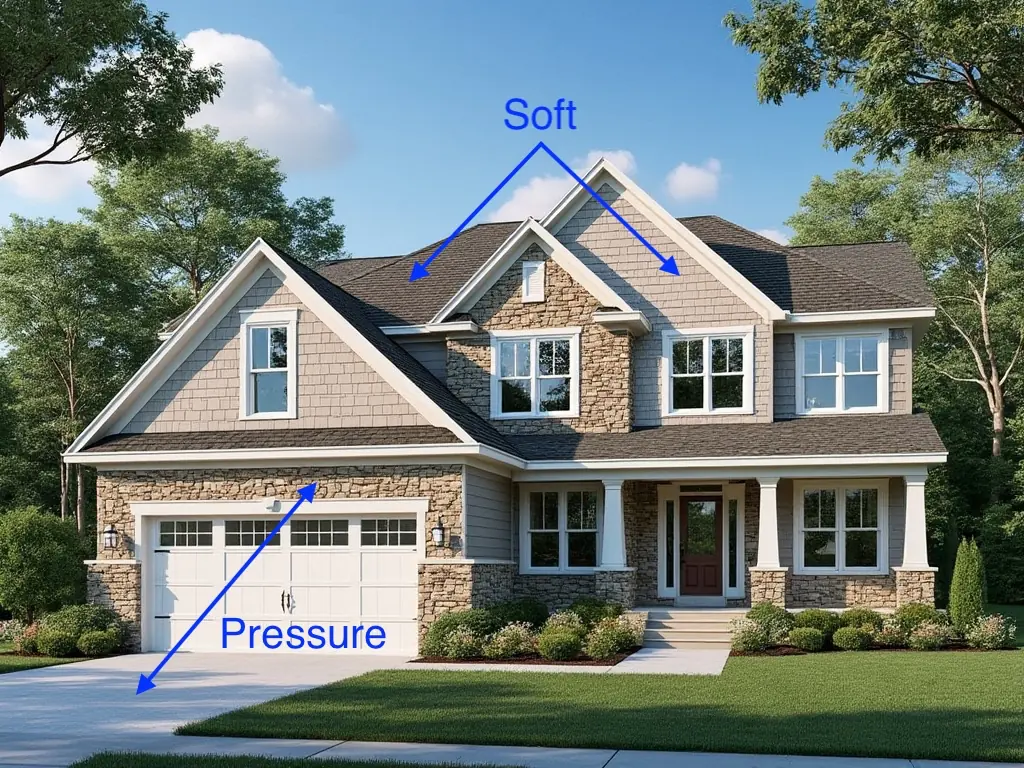

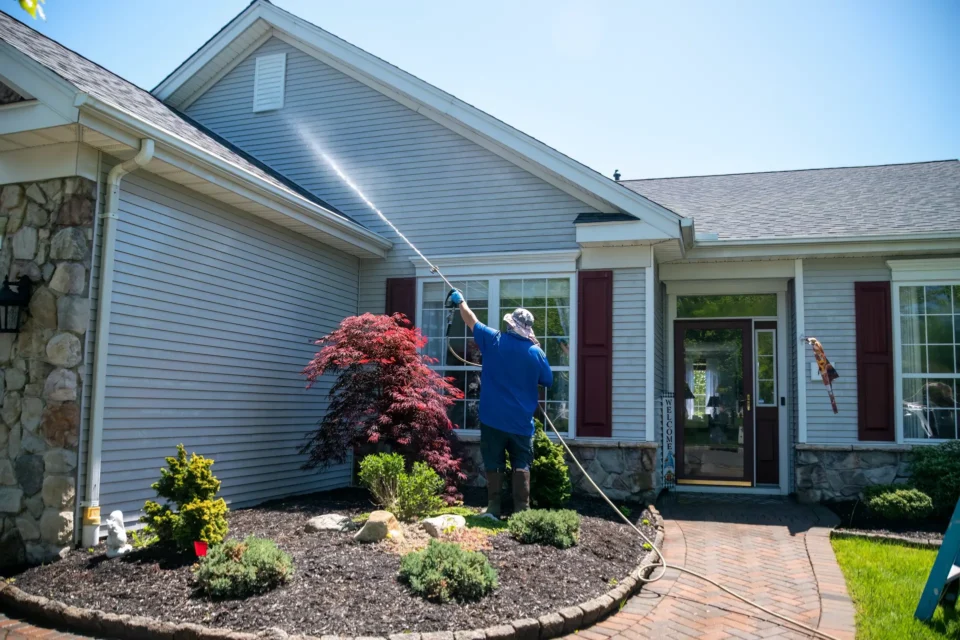
Soft washing is generally safer for delicate exterior surfaces, while pressure washing is better suited to durable materials that can tolerate stronger water force. The right method depends on the surface, the type of buildup, and whether the goal is to remove organic growth, embedded dirt, or both.
For siding, roofing, painted finishes, and other vulnerable materials, soft washing often reduces the risk of damage. For concrete, some masonry, and certain hardscape surfaces, controlled pressure can be more effective. Choosing correctly protects appearance and extends surface life over many years.
What Is The Main Difference Between Soft Washing And Pressure Washing?
The main difference is how each method removes dirt and biological growth. Pressure Washing relies primarily on water force, while soft washing uses lower pressure combined with cleaning solutions that break down mold, algae, mildew, and other organic contaminants.
Both methods can clean exterior surfaces effectively when used correctly. The key is matching the cleaning process to the material being treated.
Pressure washing depends on mechanical force
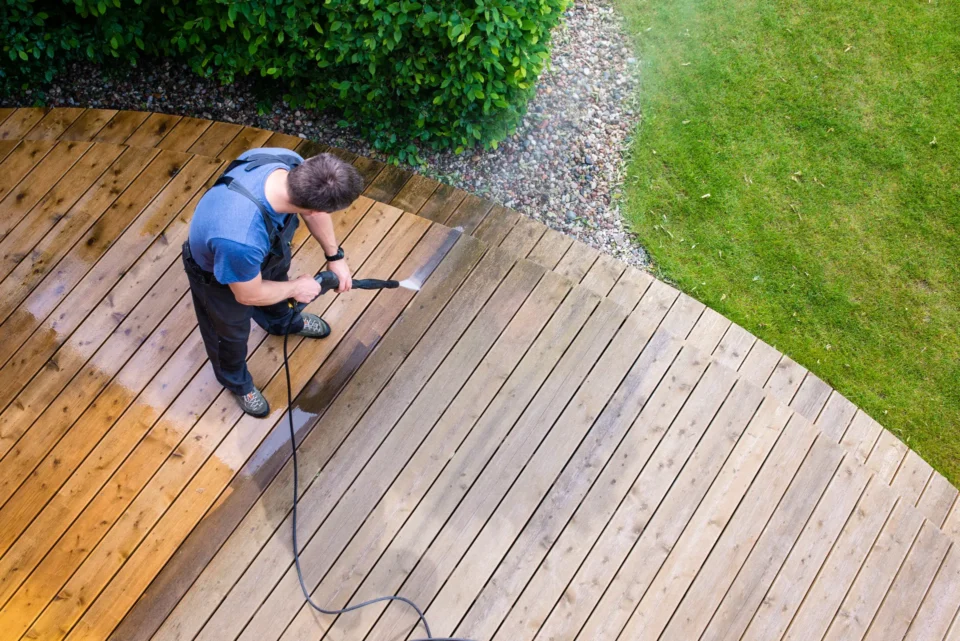
Traditional pressure washing uses a machine that pushes water at high pressure through a nozzle. The stronger water stream helps remove compacted dirt, mud, grime, and some surface stains.
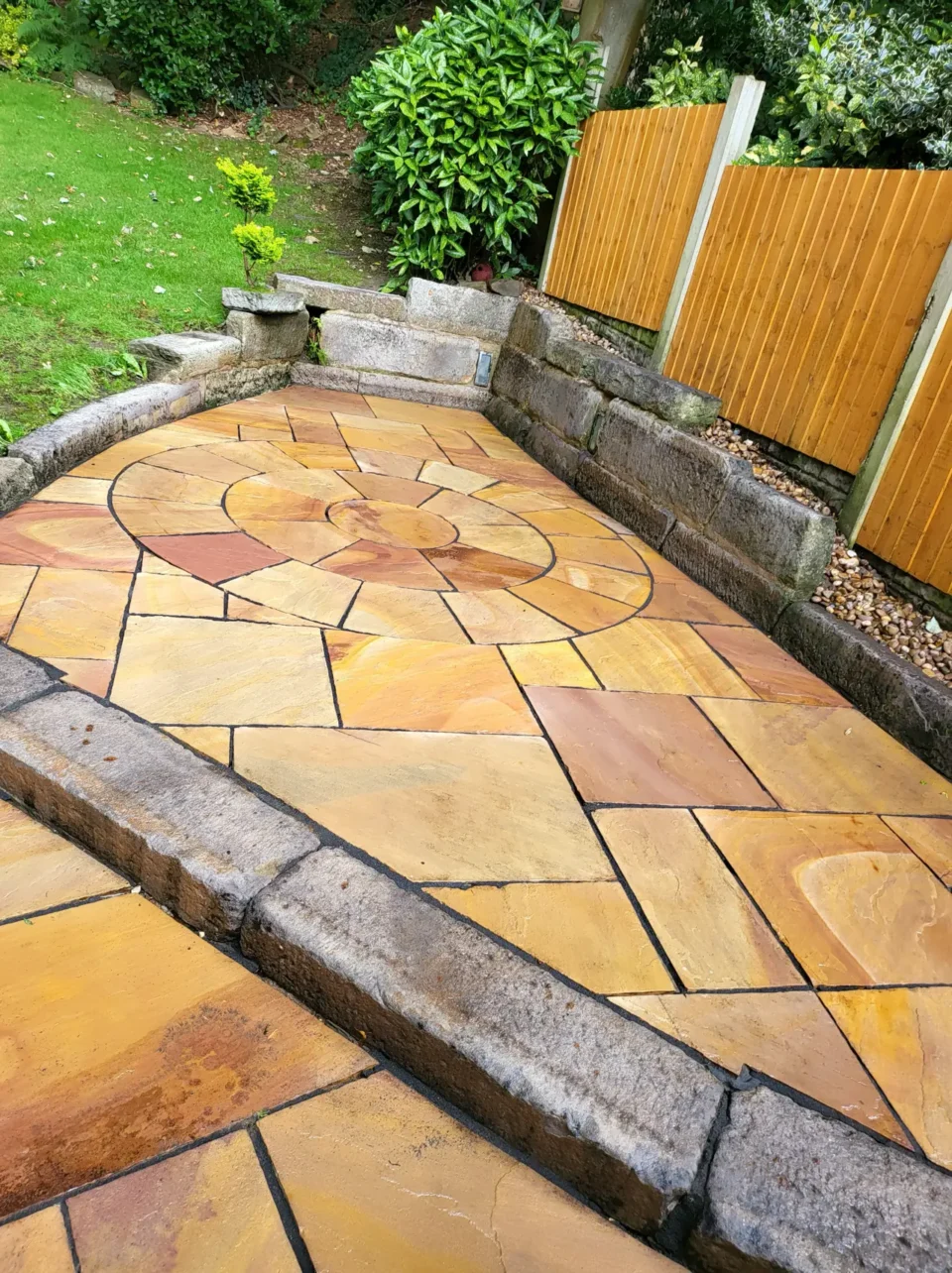
This approach is used on durable materials such as concrete driveways, some brick surfaces, sidewalks, and certain hardscape areas.
However, more pressure does not automatically mean a better result. Excessive force can leave lines, strip coatings, damage mortar, or force water into places it should not enter.
Soft washing depends more on chemistry
Soft washing applies cleaning solutions at much lower pressure. Those solutions are designed to loosen and treat organic growth rather than relying on force alone.
After adequate dwell time, the surface is rinsed gently.
This method is often used for siding, roofing, painted surfaces, stucco, and other materials that could be damaged by aggressive pressure.
When comparing Soft Washing vs. Pressure Washing, homeowners should think less about which method is stronger and more about which method is appropriate for the surface.
Can High-pressure Washing Damage Vinyl Siding Or Roof Shingles?
Yes. High-pressure washing can damage vinyl siding and asphalt roof shingles when the equipment is used too aggressively or at the wrong angle.
The damage may be immediate and visible, or it may create hidden problems that appear later.
Vinyl siding can crack or loosen
Vinyl siding is durable, but it is not designed to withstand concentrated high-pressure water at close range.
Strong pressure can crack older panels, loosen sections, force water behind the siding, or damage seals around windows and trim.
Water pushed behind siding can reach sheathing, insulation, or wall cavities. That creates a moisture problem even if the siding looks clean from the outside.
For this reason, lower-pressure house washing methods are generally preferred.
Roof shingles are even more sensitive
Asphalt shingles have a protective layer of granules on their surface. Aggressive pressure can loosen or remove those granules.
High-pressure cleaning can also lift shingles, damage edges, disturb flashing, and force water beneath roofing materials.
Roof cleaning should be approached differently from driveway cleaning.
A professional should use a method intended for roofing materials rather than simply lowering the pressure slightly on standard equipment.
Which Exterior Surfaces Should Never Be Pressure Washed?
Some surfaces should not be cleaned with high pressure because the risk of damage exceeds the cleaning benefit.
These include asphalt shingles, delicate wood, older painted surfaces, fragile stucco, deteriorated mortar, and certain types of siding.
Asphalt roofing should avoid aggressive pressure
Roofing systems are designed to shed rain, not withstand concentrated water streams directed upward or at close range.
High pressure can shorten shingle life and create leaks.
Older wood requires caution
Wood decks, fences, and siding can be cleaned, but they should not be treated like concrete.
Too much pressure can raise the grain, create grooves, splinter boards, and leave permanent marks.
Older or weathered wood is particularly vulnerable.
Damaged masonry can deteriorate further
Brick and masonry may appear extremely durable, but old mortar joints can be fragile.
Strong pressure can erode mortar, widen cracks, and drive water into porous materials.
A visual inspection should come before cleaning.
Painted surfaces can lose their finish
High pressure may strip peeling paint, but it can also remove paint that was still performing adequately.
If the goal is cleaning rather than surface preparation for repainting, a gentler method is usually more appropriate.
Electrical and vent openings require care
Outdoor outlets, light fixtures, soffit vents, dryer vents, and other openings should never receive uncontrolled high-pressure spray.
Water intrusion can create electrical hazards, moisture damage, and indoor problems.
Safe Exterior House Cleaning depends on understanding both the material and the vulnerable areas around it.
Is Soft Washing As Effective As Pressure Washing For Removing Mold And Algae?
Soft washing is often more effective than high-pressure washing for mold, algae, mildew, and other organic growth because it treats the organisms rather than only removing what is visible on the surface.
Pressure can wash away discoloration, but remaining growth may return quickly if it is not properly treated.
Cleaning solutions target biological growth
Soft-washing solutions are formulated to break down organic contaminants.
The solution is applied evenly and allowed to remain on the surface for a controlled period before rinsing.
This process can reach areas that would be difficult to clean safely with strong pressure.
Pressure alone may remove only surface staining
High-pressure water can make a dirty surface look cleaner immediately.
However, blasting away visible algae does not necessarily eliminate the underlying contamination.
If spores or biological residue remain, discoloration can return.
Effectiveness depends on correct dilution
Soft washing is not simply spraying chemicals onto a house.
The concentration should be appropriate for the material and the severity of the buildup.
Too weak a solution may produce poor results. Too strong a mixture can affect finishes, plants, or surrounding materials.
A professional should adjust the cleaning solution, dwell time, and rinse process based on the actual surface.
How Much Does Soft Washing Cost Compared To Traditional Pressure Washing?
Soft washing and traditional pressure washing can have similar pricing, but the final cost depends more on the property, surface area, access, buildup, and required treatment than on the method alone.
Soft washing is not automatically more expensive simply because cleaning solutions are involved.
House size affects both services
Larger homes require more labor, more solution, more setup time, and more rinsing.
Two-story properties may also require specialized equipment or additional safety procedures.
Surface condition can increase cost
Heavy algae, mildew, oxidation, neglected surfaces, or unusual staining may require additional treatment.
Homes that have not been cleaned for many years can take longer than properties maintained regularly.
Specialty treatments may cost extra
Rust, oil, irrigation stains, efflorescence, oxidation, paint transfer, and other difficult stains often require products beyond a standard house wash.
Those treatments should be priced separately when they involve extra materials or labor.
Comparing quotes requires matching the scope
One estimate may include siding, soffits, fascia, and exterior trim, while another may cover siding only.
Ask what surfaces are included, whether pretreatment or post-treatment is part of the service, and whether stain removal is separate.
The cheapest quote is not necessarily the best overall value if the cleaning method is wrong for the surface.
Is Soft Washing Safe For Plants, Landscaping, And Pets?
Soft washing can be performed safely around plants, landscaping, and pets when the cleaning solution is mixed correctly, surrounding areas are protected, and the property is rinsed thoroughly.
The process still requires preparation and careful handling.
Plants should be protected before cleaning begins
Landscaping near the house should usually be pre-wet with clean water.
This reduces the chance that leaves or soil will absorb concentrated cleaning solution.
Sensitive plants may need extra protection depending on their location and condition.
After washing, nearby vegetation should be rinsed again.
Runoff should be controlled
Cleaning solution should not be allowed to pool unnecessarily around roots, decorative ponds, pet areas, or drainage points.
A professional should plan how water moves across the property before starting.
Pets should remain away from the work area
Dogs, cats, and other pets should be kept indoors or in a secure area while cleaning is underway.
They should not walk through wet chemical residue or drink from puddles created during service.
Once the surface and surrounding areas have been thoroughly rinsed and are safe to access, normal use can resume.
Communication matters
Homeowners should tell the cleaning company about sensitive landscaping, fish ponds, outdoor pet areas, vegetable gardens, and other features that may need extra precautions.
A careful contractor will adjust preparation and rinsing procedures accordingly.
How Long Do The Results Of Soft Washing Last Compared To Pressure Washing?
Soft washing can keep surfaces cleaner longer when the main problem is biological growth because the cleaning solution treats algae, mold, and mildew rather than only removing visible buildup.
However, the exact duration depends on shade, humidity, tree cover, drainage, surface type, and how quickly contamination returns.
Shaded areas usually get dirty faster
North-facing walls, heavily wooded areas, and surfaces that stay damp tend to develop organic growth sooner.
A sunny wall with good airflow may stay clean much longer than a shaded wall on the same property.
Soft washing can slow visible regrowth
Because soft washing addresses the biological material, it may delay the return of dark or green staining compared with pressure-only cleaning.
That does not mean the surface will stay clean permanently.
Spores, pollen, dirt, and moisture continue to reach the exterior after cleaning.
Pressure washing still has an important role
For durable hard surfaces covered with dirt, mud, tire marks, or embedded grime, controlled pressure may produce the better result.
Concrete does not necessarily benefit from a soft-washing-only approach when mechanical cleaning is needed.
Many properties therefore require both methods.
The safest approach is not choosing one method for the entire home. It is using soft washing where materials are vulnerable and controlled pressure where harder surfaces can tolerate it.
Final Thoughts
Soft washing is generally safer for siding, roofing, painted surfaces, and other materials that can be damaged by excessive water pressure. Pressure washing remains valuable for concrete, some masonry, and durable hardscape when the equipment is used correctly. The best method depends on the surface, type of buildup, condition, and surrounding features. Soft washing often provides longer-lasting results against algae and mold because it treats organic growth directly. Proper dilution, plant protection, rinsing, and pressure control are essential for safe, effective exterior cleaning around any residential property for homeowners today.
Choose The Right Cleaning Method With Power Clean Pressure Washing
Every exterior surface should be cleaned according to what it is made from, not with the same pressure setting across the entire property.
At Power Clean Pressure Washing, homeowners can discuss which areas are best suited to soft washing, which can handle controlled pressure, and where special precautions may be needed.
That distinction helps protect siding, roofing, paint, wood, masonry, and landscaping while still achieving a noticeable improvement.
If your home has algae, mildew, dirt, pollen, or weather-related buildup, the first step is identifying the surface and the type of contamination.
Power Clean Pressure Washing can help select an appropriate cleaning method for each area rather than relying on unnecessary force. A surface-specific approach can improve results, reduce the risk of damage, and help exterior materials maintain their appearance for longer.