

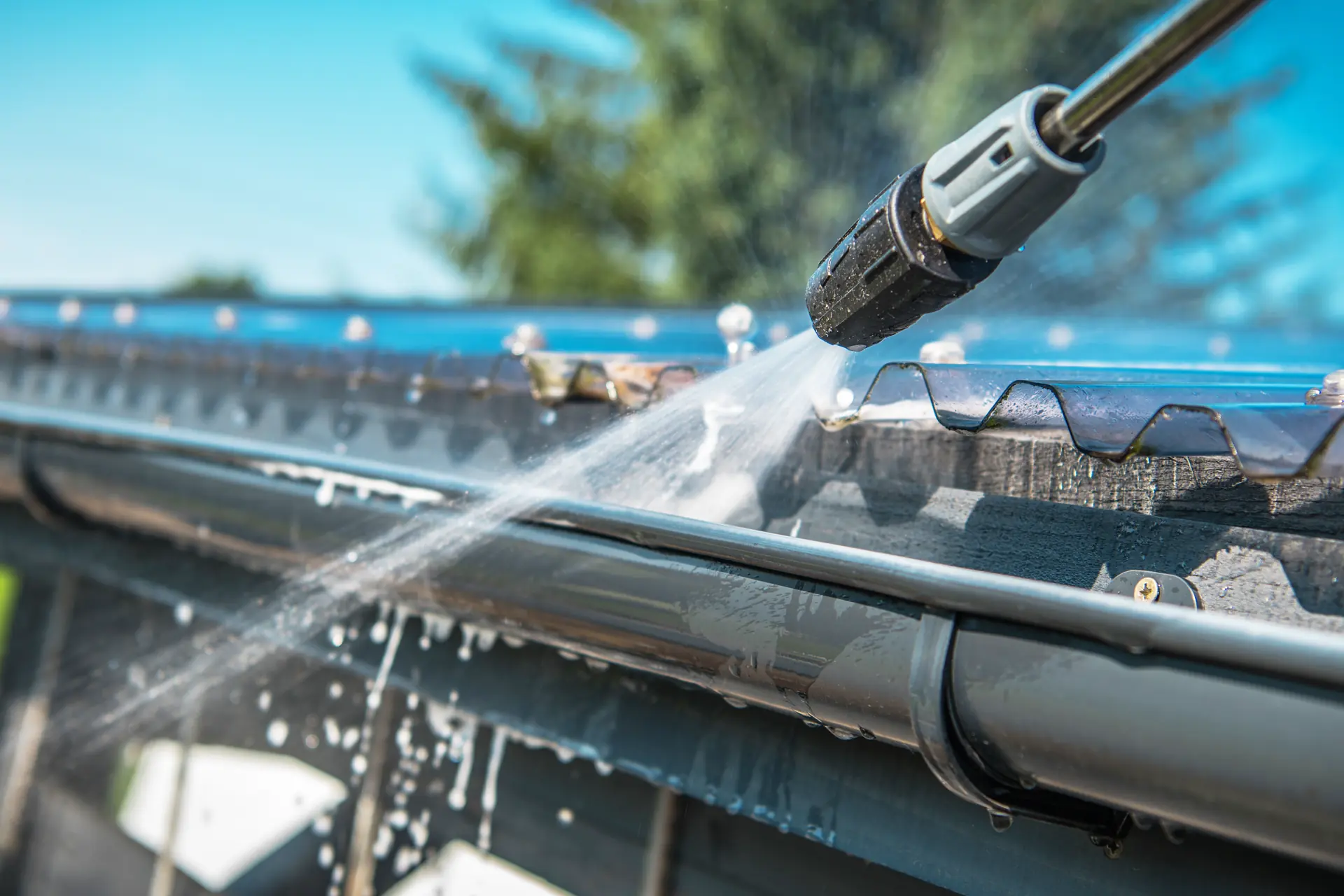
Gutters can overflow even when the visible channel looks clean because blockages may exist inside downspouts, outlet openings, or underground drainage pipes. Poor gutter slope, loose sections, and insufficient drainage capacity can also prevent rainwater from moving away from the roof properly.
When homeowners notice gutters overflowing but not clogged, the problem may involve more than leaves or debris. Professional gutter cleaning can address hidden buildup and restricted downspouts, but persistent overflow may indicate a drainage or installation problem that requires a qualified gutter contractor.
Why Can Clean-Looking Gutters Still Overflow?
Gutters collect rainwater from the roof and direct it toward downspouts, where the water travels away from the building.
For this process to work, every part of the drainage system must allow water to move freely. A clean gutter channel does not guarantee proper drainage if water cannot leave through the outlet or downspout.
The Visible Gutter Is Only One Part of the System
Homeowners can sometimes see the inside of their gutters from an upstairs window or another safe ground-level viewpoint. The exposed section may look completely clear.
However, the complete system includes gutter outlets, downspout elbows, vertical pipes, and sometimes underground drainage connections. A restriction anywhere along this route can cause rainwater to back up.
For example, a gutter may appear empty after a storm, but an obstruction inside the downspout could slow drainage enough to cause overflowing during heavier rainfall.
Overflow Does Not Always Mean a Blockage
Some gutters overflow because water cannot travel efficiently toward the downspouts.
Possible causes include:
- Improper slope: Water collects in sections that do not drain toward the outlet.
- Sagging gutters: Loose supports create low areas where water accumulates.
- Limited capacity: The system cannot carry incoming runoff during intense rainfall.
- Poor roof-edge alignment: Water overshoots the gutter or runs behind it.
- Insufficient downspout capacity: Water enters faster than the outlets can discharge it.
These conditions may occur even when every visible gutter section is free of debris.
The important question is whether the gutter is overflowing because water cannot leave or because water is not entering and traveling through the system correctly.
Where Can Hidden Blockages Develop?
Hidden blockages commonly form near gutter outlets, inside downspouts, and at underground drainage connections. These locations are difficult to evaluate through a quick visual inspection.
Gutter Outlets
The gutter outlet is the opening where water enters the downspout.
Leaves, roofing granules, pine needles, and fine debris can accumulate around this point. A relatively small buildup may reduce the amount of water passing through.
During light rainfall, the opening may still drain enough water to prevent visible problems. During a heavy storm, incoming water can exceed the restricted outlet’s capacity and spill over the gutter edge.
This explains why some homeowners notice overflow only during intense rainfall.
Downspout Elbows
Downspouts often include angled sections that redirect water around roof overhangs or toward the ground. These bends can collect debris that travels through the gutter.
An obstruction at an elbow may be difficult to see from outside. Water can move through a partially blocked downspout during ordinary rainfall but back up when runoff increases.
A professional cleaning should consider these less-visible connections rather than focusing exclusively on the open gutter channel.
Underground Drainage Pipes
Some homes have downspouts connected to buried drainage pipes. These pipes direct roof runoff toward an approved discharge point away from the building.
Over time, underground connections may develop restrictions from sediment, roots, or damaged piping. Water can back up through the downspout when the buried system cannot accept incoming runoff.
However, underground drainage inspection and repair may require a separate drainage contractor.
At Power Clean Pressure Washing, our gutter cleaning services in Rock Hill, SC address gutter debris and downspout blockages. Problems involving buried drainage infrastructure may require further professional evaluation.
Gutter Guards and Screens
Gutter guards can reduce the amount of larger debris entering a gutter, but they do not eliminate every maintenance concern.
Fine particles can still collect beneath some systems. Leaves and pine needles may also accumulate on top of screens, restricting the passage of water.
In certain conditions, runoff may move across a blocked screen instead of entering the gutter. A gutter can therefore appear clean beneath the guard while water continues spilling over the front.
The condition and design of the guard should be considered when investigating overflow.
How Can You Tell Cleaning From a Repair Problem?
The difference between a cleaning issue and a repair issue depends on whether the system is physically obstructed or unable to manage water because of its condition or design.
A professional assessment can help identify which problem is responsible.
Signs That Cleaning May Resolve the Problem
Cleaning may help when overflow is caused by leaves, sediment, or other debris restricting the drainage path.
Common observations include:
- Water collecting near one downspout
- Overflow appearing near an outlet
- Slow or limited discharge from a downspout
- Debris visible around gutter guards
- Problems becoming more noticeable after leaves or branches fall
These observations suggest possible restrictions, but they do not establish the cause without checking water movement through the system.
When Gutter Slope Causes Overflow
Gutters need an appropriate slope toward their downspouts. If a section tilts away from the outlet, water may collect in the wrong location.
Sagging or improperly positioned hangers can create the same problem.
For example, a gutter may contain very little debris but hold standing water after rainfall. That remaining water can indicate a drainage alignment issue.
Cleaning may remove sediment from the low area, but it will not correct the underlying slope. A qualified gutter contractor may need to adjust or repair the affected section.
When Heavy Rain Exceeds Gutter Capacity
A gutter system must accommodate runoff from the roof area draining into it. During intense rainfall, a large amount of water can arrive within a short period.
Gutters that are too small, have too few downspouts, or receive concentrated water from adjoining roof slopes may overflow despite being clean.
Roof valleys deserve particular attention because they can direct substantial runoff into one section.
For homeowners in Rock Hill, SC, sudden heavy rainfall may reveal capacity limitations that remain unnoticed during lighter showers.
An appropriately qualified contractor can evaluate whether the gutter size, downspout arrangement, and roof drainage layout are suitable.
Water May Be Missing the Gutter
Not every stream of water falling near a gutter represents actual overflow.
Water may travel behind the gutter if the roof-edge flashing or installation is defective. Alternatively, concentrated runoff may overshoot the front edge without filling the channel.
These situations require inspection of the roof-edge details and gutter positioning. Repeated cleaning will not correct a system that fails to collect rainwater properly.
What Should a Professional Gutter Cleaning Include?
Professional gutter cleaning should address debris accumulation and help establish whether water can move through the visible drainage system.
A complete cleaning evaluation involves more than removing leaves from the easiest sections to reach.
Clearing the Gutter Channels
The first step involves removing accumulated materials that restrict water movement. These may include leaves, twigs, roofing granules, dirt, and decomposed organic debris.
Fine sediment is particularly important because it can accumulate along the bottom of an otherwise clean-looking gutter.
Removing these materials helps restore the open drainage path.
Checking Downspouts and Outlets
Downspout access is an important part of evaluating gutter performance. A service provider should consider whether water can pass through accessible outlets and downspouts.
At Power Clean Pressure Washing, our published gutter cleaning process includes clearing debris, checking downspouts, and flushing gutters to evaluate water movement.
These checks can help identify restrictions that are not visible from the ground. However, the scope of cleaning should be distinguished from structural repairs or work on buried drainage pipes.
Reviewing Visible Gutter Conditions
Cleaning also provides an opportunity to identify problems that may require additional attention.
Possible observations include loose fasteners, sagging sections, deteriorated joints, or visible separation from the fascia. These conditions should be reported to the homeowner.
Not every problem discovered during cleaning can be corrected by the cleaning provider. A gutter repair contractor may need to evaluate damaged supports, alignment problems, or unsuitable drainage configurations.
Why Water-Flow Checks Matter
A gutter may look clean immediately after debris removal, but water movement offers additional information. Checking drainage can reveal water collecting in low sections or flowing slowly toward an outlet.
However, an ordinary water-flow check does not reproduce every condition experienced during a severe storm.
A system may appear to drain correctly under a modest flow yet overflow when rainfall intensity increases. Persistent problems therefore deserve further investigation, even after professional cleaning.
When Should a Gutter Contractor Inspect the System?
A qualified gutter contractor should evaluate the system when overflow continues after debris-related restrictions have been addressed.
Repeated water spilling over the gutter edge can expose siding, landscaping, and areas near the foundation to concentrated runoff.
The U.S. Department of Energy and NC State Extension emphasize the importance of properly functioning gutters and downspouts for directing roof water away from buildings.
Overflow Continues After Cleaning
If water still spills over the same location after the gutter and accessible downspouts have been cleared, the problem may involve slope, capacity, or damaged components.
A repair contractor can evaluate gutter alignment, hangers, outlet sizing, and the system’s overall configuration.
Gutters Are Sagging or Pulling Away
Visible separation from the fascia may indicate damaged fasteners, deteriorated supporting material, or excessive stress on the gutter.
These conditions can change the direction of water flow and create additional openings.
Cleaning does not restore loose structural connections. A contractor should determine which components require correction.
Water Repeatedly Collects Near the Foundation
Overflow can become more concerning when large amounts of water reach areas immediately beside the building.
Poorly directed runoff can contribute to soil saturation and moisture intrusion.
If water is collecting near the foundation, the issue may involve both the gutter system and the property’s drainage conditions. A drainage or foundation specialist may be needed when the problem extends beyond the gutters.
What Homeowners Should Document
Homeowners can gather helpful information without climbing ladders or accessing the roof.
From a safe location, record where overflow occurs, whether it happens only during heavy rain, and whether water is discharging from the downspouts.
Photographs or videos taken from the ground may help the contractor understand the problem.
Avoid working on elevated gutters during storms or attempting to diagnose damaged components from an unsafe position.
FAQs
Can a Clogged Downspout Cause Gutters to Overflow?
Yes. A blocked downspout prevents rainwater from leaving the gutter efficiently. As water accumulates, it can rise above the gutter edge. The obstruction may be inside an elbow or vertical pipe, making it difficult to identify through a visual inspection.
Why Do Gutters Overflow During Heavy Rain?
Heavy rainfall can expose restricted downspouts, poor gutter slope, or insufficient drainage capacity. The gutter may handle light rainfall but overflow when water enters faster than the system can discharge it. Roof valleys can also concentrate runoff in specific sections.
Can Gutter Slope Cause Overflow?
Yes. Gutters that slope away from their outlets may collect water instead of draining. Sagging sections can create similar low points. Cleaning will not correct improper alignment, so a qualified gutter contractor may need to inspect and adjust the system.
Does Gutter Cleaning Include Downspouts?
It depends on the provider and service scope. Power Clean Pressure Washing’s published gutter cleaning process includes downspout inspection and clearing. Homeowners should confirm which accessible components are included and whether underground drainage work requires another contractor.
Why Do Gutters Overflow Even With Gutter Guards?
Gutter guards can collect leaves, pine needles, and sediment on their surfaces. Water may flow over the guard instead of entering the gutter. Some designs can also accumulate fine debris underneath. The guard and surrounding drainage system may require professional evaluation.
Should Gutters Be Replaced if They Keep Overflowing?
Not automatically. Repeated overflow may result from blockages, improper slope, inadequate capacity, or damaged components. Some problems can be addressed through cleaning or localized repairs. A gutter contractor should determine whether adjustments, repairs, or replacement are appropriate.
Get Your Gutters Checked by Power Clean Pressure Washing
If your gutters overflow despite appearing clean, hidden debris or restricted downspouts may be preventing rainwater from draining properly.
At Power Clean Pressure Washing, we provide professional gutter cleaning for homeowners in Rock Hill, SC, and surrounding communities, including Fort Mill and Tega Cay.
We remove gutter debris, address accessible downspout blockages, and check water movement to help identify cleaning-related restrictions. If the problem involves damaged gutter sections or drainage infrastructure beyond cleaning, a qualified repair contractor may be needed.
Contact Power Clean Pressure Washing at (803) 371-9053 to request gutter cleaning and discuss the overflow problems you have noticed around your home.