
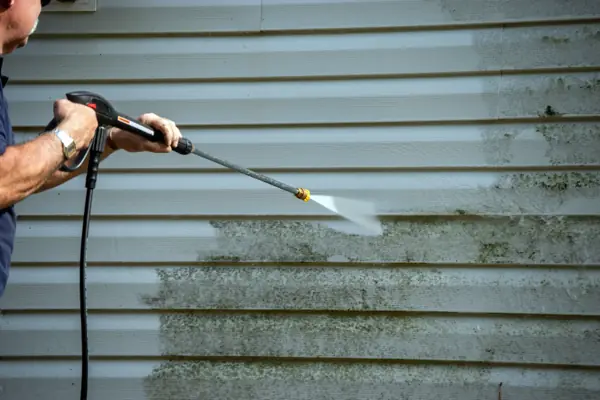
If you’ve ever noticed green slime on your driveway, black streaks on your siding, or a musty buildup on your deck, you know how quickly these growths can take over.
They’re not just an eyesore. They can make surfaces slippery, damage materials over time, and even impact your home’s overall appearance.
The good news is that pressure washing can help, but understanding how it works and when to use it properly makes all the difference.
Why it works:
- High-pressure water breaks apart buildup
- It lifts dirt, grime, and organic growth
- It restores the original look of surfaces
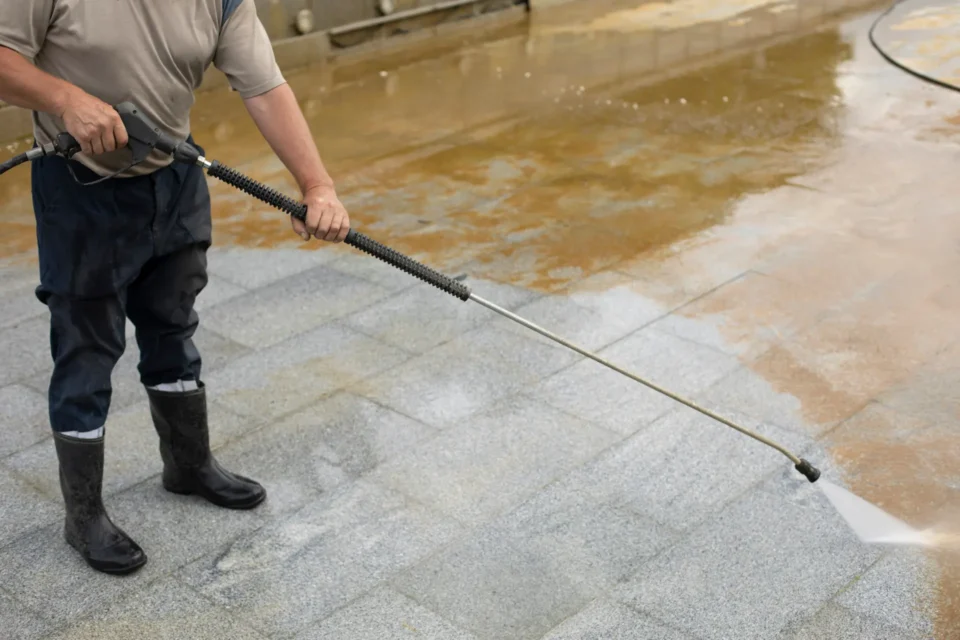
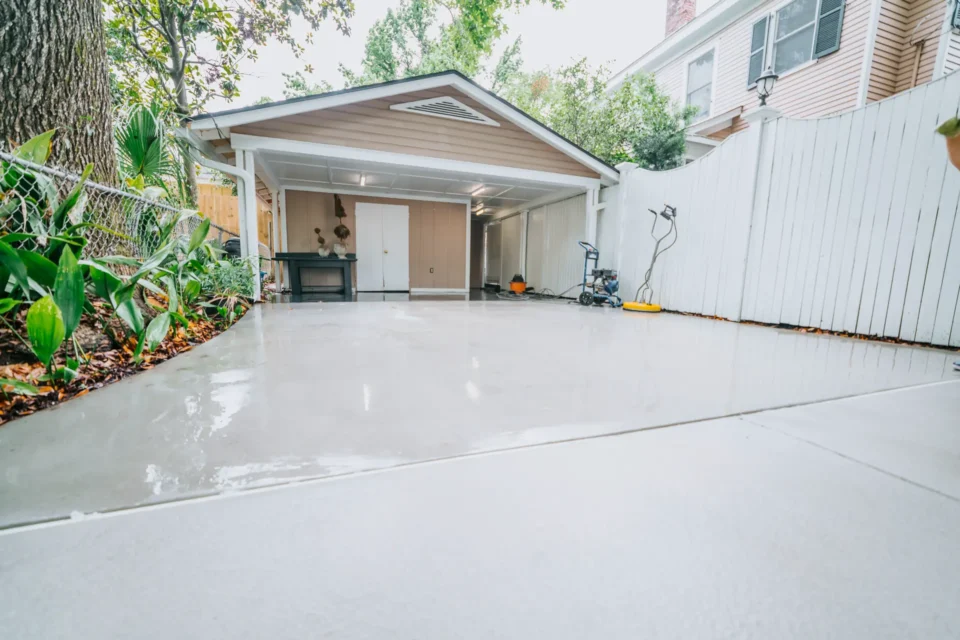
You’ll often see immediate results. A driveway covered in green algae can look brand new within minutes. The same goes for patios, sidewalks, and even some siding.
But here’s the catch:
Pressure washing is excellent at cleaning the surface, not always solving the problem long-term.
Mold, mildew, and algae thrive in moisture. If the underlying conditions remain the same, they can come back. That’s why effectiveness depends not just on removing what you see, but also addressing what you don’t.
Does Pressure Washing Completely Remove Mold, Mildew, and Algae from Surfaces?
Short answer: Not completely in most cases
Pressure washing removes the visible layer, but it may not fully eliminate spores embedded in the material.
Why complete removal is difficult:
- Mold and algae grow deep in porous surfaces
- Concrete, wood, and siding can trap spores
- Water pressure doesn’t always reach microscopic roots
Example:
You might pressure wash a concrete driveway and see perfect results right away. But weeks later, those same green patches can return. That’s often because spores were still present beneath the surface. This is especially common on surfaces like driveways and other porous areas where organic growth can settle in below what’s visible.
What improves results:
- Pre-treatment solutions
- Post-cleaning applications
- Proper drying conditions
Think of pressure washing as the first step in a more complete cleaning process.
Does Pressure Washing Kill Mold or Just Remove It?
Short answer: It mostly removes, not kills
Pressure washing alone is not designed to kill mold at its source.
What actually happens:
- Surface growth is blasted away
- Spores may remain in cracks or pores
- Moisture can allow regrowth
Why killing mold matters:
If mold isn’t killed, it can return faster than expected, especially in humid or shaded areas.
What helps kill mold:
- Mold-killing cleaning agents
- Algaecides or mildewcides
- Soft washing systems that apply treatment before rinsing
Important note:
Using only high pressure can sometimes make things worse by spreading spores to nearby areas if not handled properly. In many cases, soft washing is the safer option for treating contamination without damaging delicate surfaces.
What Surfaces Can Safely Be Pressure Washed to Remove Mold and Algae?
Not every surface should be treated the same way. Knowing where pressure washing works best helps avoid damage.
Surfaces that handle pressure washing well:
- Concrete driveways and sidewalks
- Brick and stone
- Paver patios
- Garage floors
These materials are durable and can withstand higher pressure levels. Hard surfaces such as concrete cleaning areas usually respond well when proper equipment and pressure settings are used.
Surfaces that require caution:
- Wood decks and fences
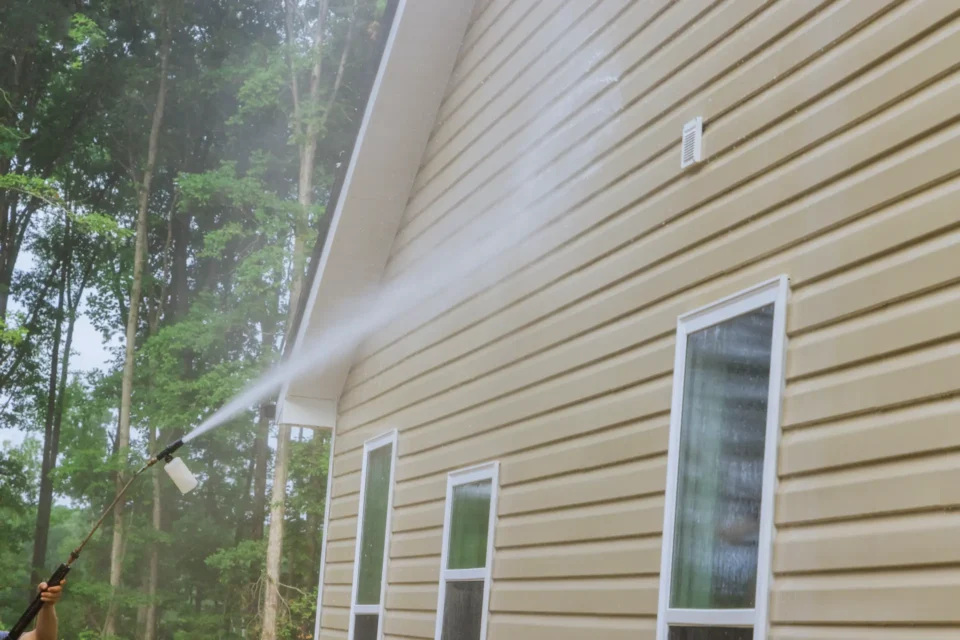
- Vinyl siding
- Painted surfaces
Too much pressure can:
- Strip paint
- Etch wood
- Force water into gaps
Wood in particular can be vulnerable, which is why services like deck cleaning often require a more careful approach than many homeowners expect.
Surfaces best cleaned with soft washing:
- Roof shingles
- Delicate siding
- Older or weathered materials
For surfaces like shingles, roof cleaning is usually better handled with low-pressure treatment rather than aggressive washing.
Pro Tip:
The key isn’t just pressure. It’s using the right pressure for the right surface.
Is Pressure Washing Alone Enough to Prevent Mold and Mildew from Coming Back?
Short answer: No, it’s not enough on its own
Pressure washing improves appearance but doesn’t stop future growth.
Why mold and algae return:
- Moist environments remain unchanged
- Spores are still present
- Dirt and debris provide nutrients
How to slow down regrowth:
- Apply protective treatments after cleaning
- Keep surfaces dry when possible
- Improve drainage around your property
- Trim trees to increase sunlight exposure
Real-world example:
A shaded driveway under trees will likely see algae return faster than one in direct sunlight, even after a thorough cleaning.
Consistency and proper maintenance are key to keeping surfaces clean longer. That’s one reason homeowners often notice recurring issues on siding and exterior walls, especially when buildup is left untreated for too long. Related issues like these are also discussed in how exterior cleaning protects paint and siding.
Do You Need Chemicals or Soft Washing for Effective Mold and Algae Removal?
Short answer: Yes, for long-lasting results
Combining pressure washing with the right solutions delivers the best outcome.
What is soft washing?
Soft washing uses low-pressure water along with specialized cleaning solutions to safely treat surfaces.
Benefits of using chemicals:
- Kills mold and algae at the root
- Prevents rapid regrowth
- Provides a deeper clean
- Safe for delicate materials
When to use soft washing:
- Roof cleaning
- Siding with mold or mildew
- Painted or fragile surfaces
When pressure washing works best:
- Concrete and hard surfaces
- Heavily soiled areas
Best approach:
A combination of both methods often gives the most effective and long-lasting results. For homes with widespread buildup, exterior cleaning often works best when the cleaning method is matched to each material instead of using one process everywhere.
Final Thoughts
Pressure washing is a powerful tool for removing mold, mildew, and algae, but it’s only part of the solution. While it quickly restores the look of your surfaces, it doesn’t always eliminate the root cause of the problem.
Without proper treatment, these growths can return, especially in areas with moisture and shade. For the best results, it’s important to use the right method for each surface and consider adding treatments that kill spores and slow down regrowth.
Whether it’s concrete, siding, or roofing, a tailored approach makes all the difference in how long your surfaces stay clean.
Get a Longer-Lasting Clean with Safe and Effective Pressure Washing
If you want a deeper clean that lasts longer, Power Clean Pressure Washing is here to help.
We use the right combination of pressure washing and soft washing techniques to safely remove mold, mildew, and algae while helping prevent them from coming back.
Reach out today to learn more or schedule your next service.