
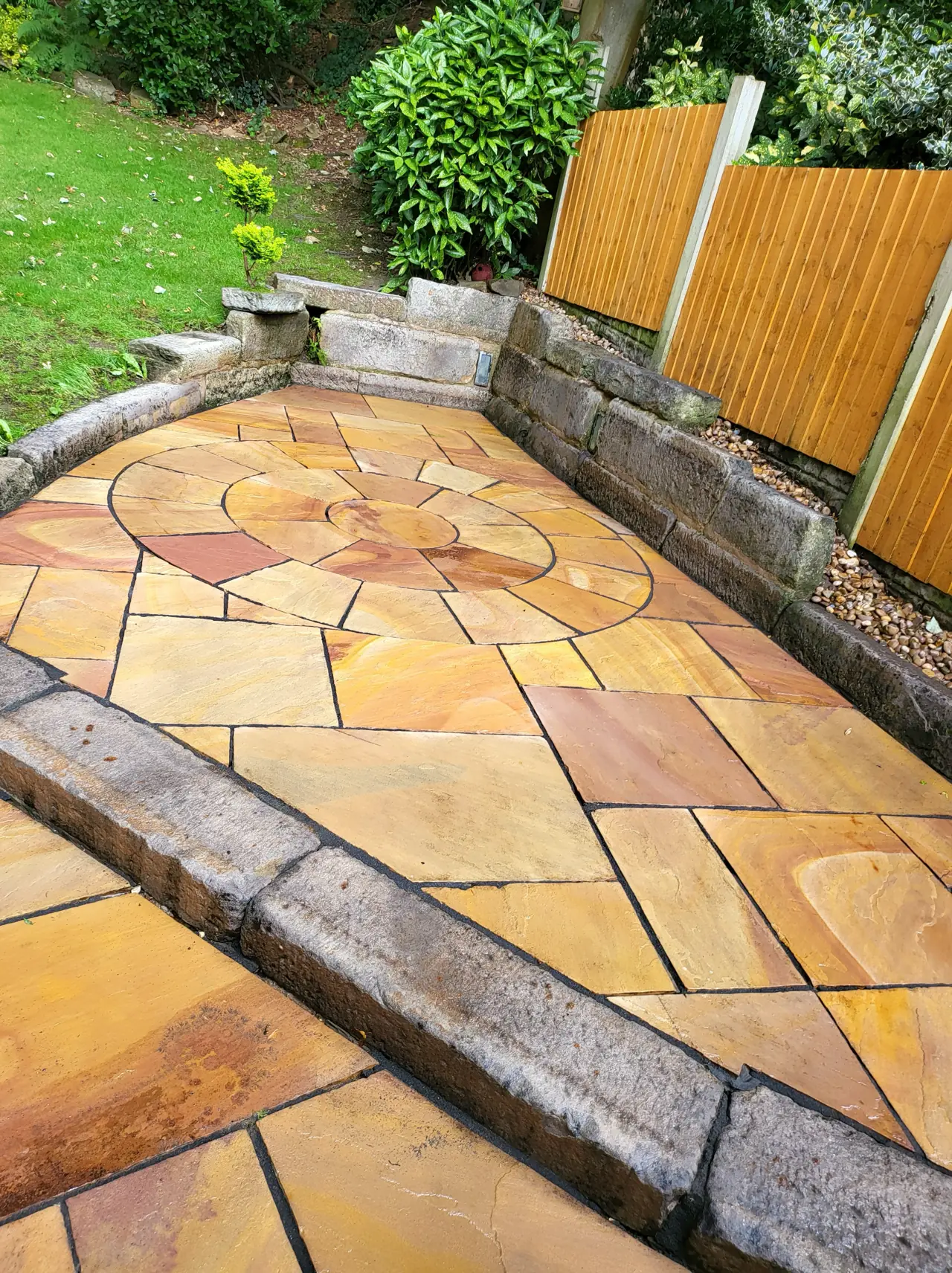
Pavers generally need thorough cleaning before sealing, but re-sanding depends on the condition of the joints and the materials already installed. Missing, loose, or deteriorated joint sand may need replacement. The surface and joints must also meet the selected sealer’s preparation, moisture, and curing requirements.
When deciding whether to clean and resand pavers before sealing, homeowners should consider more than the appearance of their patio. Dirt, stains, sand residue, and trapped moisture can affect the finished surface. A professional assessment can determine which preparation steps are necessary before sealing begins.
Why Does Preparation Affect Paver Sealing Results?
Paver sealing works best when the surface is clean, compatible with the selected product, and properly prepared.
Sealers are designed to provide a protective treatment to suitable paving materials. Depending on the formulation, they may help resist staining, change surface appearance, or stabilize compatible joint materials.
However, applying a sealer over dirt, moisture, or unsuitable joint sand can lead to disappointing results.
Surface Contamination Can Affect the Finish
Patio pavers collect dirt, pollen, organic growth, and other contaminants through regular outdoor exposure.
Some deposits are clearly visible, while others become embedded in the textured surface.
If these materials remain during sealing, they can interfere with the appearance or performance of the coating.
For example, a Charlotte homeowner may have a concrete paver patio that looks relatively clean from a distance but contains algae residue in shaded sections.
Applying a sealer without appropriate cleaning could leave discoloration visible beneath the finished treatment.
Unilock recommends ensuring pavers are free from dirt, oil, dust, and other loose materials before sealing.
Sealing Does Not Correct Existing Defects
A protective sealer does not automatically repair damaged pavers, restore missing joint sand, or correct drainage problems.
If pavers have shifted, settled, or developed uneven sections, those concerns should be evaluated before sealing.
Likewise, sealing over deteriorated joint material may leave the underlying problem unresolved.
The preparation stage allows the contractor to identify whether cleaning alone is sufficient or additional work is necessary.
Why the Order of Work Matters
For many compatible paver systems, the process involves inspecting the surface, cleaning it, addressing joint sand where needed, and allowing materials to meet the manufacturer’s requirements before sealing.
The specific sequence depends on the existing joint material and selected products.
Polymeric sand, for example, requires particular installation and curing conditions.
Some sealers also have restrictions concerning recently installed joint sand.
The contractor should coordinate the complete system rather than treating cleaning, sanding, and sealing as unrelated tasks.
When Do Paver Joints Need New Sand?
Paver joints are the spaces between individual paving units.
Jointing material helps maintain the intended arrangement of the pavers and supports the pavement system’s performance.
Over time, joint sand may wash away, deteriorate, or become displaced.
However, not every patio needs complete re-sanding before sealing.
Signs That Joint Sand Needs Attention
A professional may recommend replacing or replenishing joint sand when:
- Sand levels are noticeably below the intended joint depth.
- Sections contain loose or missing material.
- Existing polymeric sand has cracked or deteriorated.
- Cleaning has displaced unsuitable or already weakened sand.
- Joints contain debris or incompatible material.
- The existing jointing system no longer performs as intended.
The appropriate work depends on how much material remains and whether it is compatible with the replacement product.
Regular Sand vs. Polymeric Sand
Traditional joint sand and polymeric sand behave differently.
Regular joint sand is typically a properly graded granular material installed between pavers.
Polymeric sand contains binding agents that activate under specified conditions, helping the material form more cohesive joints.
Polymeric sand may help limit erosion, weed growth, and insect activity, but it does not guarantee that these problems will never occur.
It also requires installation according to the product manufacturer’s instructions.
Some paver types or joint configurations are unsuitable for particular polymeric sand products.
A contractor should confirm compatibility rather than automatically using polymeric sand on every patio.
Should All Existing Sand Be Removed?
Not necessarily.
If the current joint material is compatible, properly positioned, and in good condition, a complete replacement may be unnecessary.
However, installing new polymeric sand over failed or incompatible material without adequate preparation may create problems.
Unilock recommends removing deteriorated polymeric joint material to an appropriate depth before replacing it.
The actual requirements depend on the specified material and joint configuration.
What About Joint-Stabilizing Sealers?
Certain sealers are formulated to stabilize suitable joint sand while treating the paver surface.
However, not every paver sealer provides joint stabilization.
A standard surface sealer should not automatically be considered a substitute for replacing missing sand.
Before choosing a treatment, homeowners should ask whether the proposed product is designed to protect the pavers, stabilize the joints, or perform both functions.
At Power Clean Pressure Washing, our published patio paver sealing service includes evaluating joint conditions and refilling sand when necessary.
The specific re-sanding scope should be confirmed for each project rather than assumed to be included automatically.
What Must Be Removed Before Sealing?
Cleaning before sealing involves removing contaminants that could interfere with the intended finish.
The appropriate cleaning method depends on whether the surface consists of concrete pavers, natural stone, or another material.
Dirt, Algae, and Organic Buildup
Patios exposed to moisture and shade may develop algae or other organic growth.
Leaves, grass clippings, and decomposing debris can also leave residue.
These contaminants should be addressed using cleaning methods suitable for the paver material.
Cleaning equipment must be operated carefully because excessive water pressure can dislodge joint sand or damage certain surfaces.
A professional should balance effective cleaning with protecting the existing installation.
Oil, Grease, and Other Stains
Outdoor cooking areas may accumulate food grease, while driveways and other paved spaces can develop automotive stains.
Some discoloration requires more than general surface washing.
Depending on the stain and paver material, a compatible treatment may be necessary.
However, not every stain can be removed completely.
The contractor should evaluate the affected area and explain whether residual discoloration may remain visible after sealing.
Efflorescence
Efflorescence is a whitish deposit caused by soluble salts moving to the surface of certain masonry and concrete products.
It can appear on newer concrete pavers as well as established installations.
Efflorescence is different from ordinary surface dirt.
Applying a film-forming sealer before the issue has been appropriately addressed can make discoloration more difficult to correct.
Unilock recommends allowing visible efflorescence to dissipate before sealing.
Certain manufacturers offer compatible preparation products, but the correct treatment depends on the paver and sealer specifications.
Leftover Sand and Cleaning Residue
Loose polymeric sand left on paver surfaces can create a visible haze when its binding agents are activated.
Similarly, cleaning-product residue may interfere with the sealing finish.
Before application, the surface should be inspected for remaining dust, sand, stains, and chemical residue.
This final check matters because applying a coating over contaminants can make the problem more noticeable rather than conceal it.
How Do Moisture and Product Instructions Affect Scheduling?
Moisture is one of the most important factors in determining when a cleaned patio is ready for sealing.
A surface that looks dry may still contain moisture within the pavers or joints.
The selected sealer’s instructions determine the acceptable application conditions.
Can You Seal Wet Pavers?
Some specialized sealing products have different moisture requirements, but many conventional paver sealers require a dry surface before application.
For example, Techniseal’s Wet Look Paver Protector specifies that the surface must be clean, dry, and warm to the touch.
Applying an incompatible sealer over excessive moisture can contribute to cloudiness, whitening, or other appearance problems.
The contractor should verify the actual moisture conditions and follow the manufacturer’s requirements rather than relying only on the time elapsed after washing.
Why Joint Sand Needs Time to Cure
When polymeric sand is installed, its binding agents must be activated and allowed to cure according to the product instructions.
Sealing too soon can interfere with the intended process.
However, there is no universal waiting period suitable for every combination of sand and sealer.
For example, some Techniseal sealer specifications require waiting 30 days after polymeric sand installation.
Other products have different requirements.
The contractor must check both the joint sand and sealer instructions and follow the applicable limitations.
Rain, Humidity, and Temperature
Weather conditions can affect drying and curing.
For homeowners considering patio cleaning and sealing in Charlotte, NC, rainfall and humidity may influence scheduling.
A patio cleaned shortly before another rainstorm may require additional drying time.
Nearby irrigation systems can also introduce moisture after cleaning.
Some Techniseal products specify application temperatures between 50°F and 85°F and require no rain in the following 24 hours.
These are product-specific conditions, not universal requirements for all sealers.
The contractor should explain the necessary weather window for the selected system.
Why Cloudy Sealer Can Develop
A cloudy or whitish appearance may have several possible causes.
These include trapped moisture, excessive coating buildup, incompatible previous treatments, or efflorescence beneath a film-forming product.
Polymeric sand residue can also create a whitish haze that may be confused with a sealer problem.
Not every cloudy finish has the same cause.
Correcting the issue may require evaluating the existing coating, joint material, and moisture conditions before selecting a remedy.
Applying another layer of sealer without identifying the problem may make the finish worse.
What Should a Cleaning and Sealing Quote Specify?
A paver cleaning and sealing quote should explain which preparation steps are included and which conditions may require additional work.
This helps homeowners compare actual service scopes instead of assuming every contractor follows the same process.
Surface Assessment and Cleaning
The proposal should identify the area being treated and describe the cleaning process.
Important details include:
- Paver material and surface condition
- Areas with algae, dirt, or staining
- Existing sealer or coating compatibility
- Appropriate cleaning methods
- Any specialized stain treatments
- Surface repairs that require separate evaluation
The contractor should also explain whether cleaning may disturb existing joint material.
Joint Sand Evaluation
Ask whether the contractor will inspect joint depth and condition before sealing.
If re-sanding is recommended, the quote should identify the proposed material and work involved.
Clarify whether the service includes topping up suitable joints, replacing deteriorated material, or more extensive joint preparation.
These are different scopes and may involve different preparation and curing requirements.
For a Charlotte patio with substantial sand loss, joint work may be an important part of the project.
For another patio with stable, properly filled joints, extensive replacement may offer little benefit.
Sealer Selection and Finish
Paver sealers can create different appearances and performance characteristics.
Some preserve a relatively natural finish, while others deepen color or create a more noticeable sheen.
The contractor should confirm that the product is compatible with the paver material and any existing coating.
The proposal should identify whether the sealer is intended to stabilize joints.
Homeowners should also ask whether a sample area can be evaluated before full application, particularly when choosing a color-enhancing or glossy finish.
Some finishes can affect traction when wet, making product selection important around pool decks and other frequently wet surfaces.
Drying, Curing, and Access Restrictions
The quote should explain the proposed schedule and any conditions that could delay application.
It should also identify when the area may be used again.
Pedestrian traffic, furniture placement, and vehicle access may have different restrictions.
These limits depend on the selected product and weather conditions.
A contractor should provide the applicable manufacturer’s requirements rather than promising a fixed return-to-use time for every project.
Questions Worth Asking
Before approving a proposal, ask:
- Does my patio need cleaning only, or additional joint preparation?
- Is the existing joint sand suitable for the proposed sealer?
- If re-sanding is necessary, is it included in the quote?
- How will stains, efflorescence, or old sealer be addressed?
- What drying and curing conditions must be met?
- What appearance and maintenance requirements should I expect?
Clear answers help establish whether the proposed service addresses the actual condition of the patio.
FAQs
Do Pavers Need Cleaning Before Sealing?
Generally, yes. Existing pavers should be free of dirt, algae, oil, loose debris, and other contaminants before sealing. The required cleaning method depends on the paver material and sealer specifications. Some newly installed surfaces may require different preparation.
Should Pavers Be Re-Sanded Before Sealing?
Re-sanding is appropriate when joint material is missing, deteriorated, or unsuitable for the proposed sealing system. If existing joints remain properly filled and compatible, complete replacement may not be necessary. A professional should assess joint conditions before recommending work.
Can You Seal Wet Pavers?
Many conventional paver sealers require dry surfaces and joints. Moisture can interfere with appearance and performance, potentially contributing to cloudiness or whitening. The acceptable moisture conditions depend on the exact product and must be confirmed before application.
What Causes Cloudy Paver Sealer?
Cloudy or whitish finishes may result from moisture, excessive sealer application, trapped efflorescence, or incompatibility with an existing coating. Polymeric sand haze can resemble sealer cloudiness. Identifying the cause is necessary before choosing corrective treatment.
Does Pressure Washing Remove Paver Joint Sand?
It can. Excessive pressure or unsuitable pressure washing methods may dislodge joint material, particularly when the sand is already loose or deteriorated. A professional should select an appropriate cleaning method and inspect the joints afterward to determine whether additional sand is necessary.
Can Pavers Be Sealed Immediately After Re-Sanding?
Not always. Some polymeric sands require curing before the selected sealer can be applied. Certain sealer manufacturers also specify additional waiting periods after sand installation. Both product instructions must be reviewed before scheduling the sealing stage.
Prepare Your Pavers for Sealing With Power Clean Pressure Washing
Proper paver sealing starts with understanding the condition of the surface and joints. Cleaning is generally necessary, while re-sanding depends on the existing material, joint condition, and selected sealing system.
At Power Clean Pressure Washing, we provide patio paver cleaning and sealing services for homeowners in Charlotte, NC, and other communities within our service area.
We can assess visible surface conditions, discuss preparation requirements, and determine whether joint sand replacement should be included in the proposed work.
Call Power Clean Pressure Washing at (803) 371-9053 to request a paver cleaning and sealing estimate and discuss the preparation your patio may need.