

There is something most people have in common when it comes to parking garages and residential garages: we do not really notice them until they become a problem.
You pull into a commercial parking structure and the floor is slick. There is a faint smell of oil. The painted lines are barely visible. Suddenly, you are very aware of your surroundings.
Or maybe it is your own garage at home. The concrete is stained, dust collects in corners, and last winter’s salt still lingers along the edges. It slowly becomes the one part of the property that feels neglected.
Garage and parking structure cleaning is not glamorous. It does not get the same attention as landscaping or lobby renovations. But it plays a huge role in safety, property value, and long-term maintenance.
Let’s break down why it matters and how to approach it the right way.
Why Garage and Parking Structure Cleaning Matters
A clean parking area does more than look good. It protects people, preserves surfaces, and reduces liability.
Safety and Slip Prevention
Oil and fluid spills are not just unsightly. They are dangerous.
Common contaminants in garages include:
- Oil
- Grease
- Transmission fluid
- Coolant
- Brake dust
When these substances mix with water, they create slippery surfaces. That is a problem for both drivers and pedestrians.
Slip hazards are especially concerning in:
- Commercial parking decks
- Apartment complexes
- Office buildings
- Retail centers
Property owners face real liability risks when surfaces are not maintained. A single slip-and-fall incident can cost far more than routine cleaning.
Cleaning removes those hazards before they turn into insurance claims.
First Impressions and Property Appearance
Parking garages are often the first and last touchpoint of a property.
Think about it. Before visitors see your lobby, storefront, or office suite, they park. The condition of that space quietly communicates how the property is managed.
A clean garage signals:
- Attention to detail
- Professional management
- Pride in ownership
A dirty garage suggests the opposite.
For tenants, customers, and visitors, that first impression sticks. Clean spaces feel safer and more welcoming.
Long-Term Cost Savings
Regular cleaning is not just about appearance. It protects your investment.
Over time, oil and grime can:
- Break down concrete
- Fade painted striping
- Corrode metal fixtures
- Block drainage systems
Preserving painted lines and striping reduces the need for frequent repainting. Protecting concrete surfaces prevents cracking and surface deterioration. Keeping drains clear avoids expensive plumbing or structural repairs.
Cleaning is not an expense. It is preventative maintenance.
This is also where the eco benefits of exterior cleaning services become important, since proper cleaning can help control runoff, reduce unnecessary chemical use, and extend the life of existing surfaces instead of replacing them prematurely.
Understanding the Three Levels of Parking Garage Cleaning
Not every garage requires the same intensity of service. Cleaning levels typically fall into three categories.
Level 1 – High-Pressure Rinse
This is the most basic service.
A high-pressure rinse removes:
- Loose dirt
- Surface debris
- Light dust accumulation
It is ideal for garages that are regularly maintained and do not have heavy oil buildup.
Benefits include:
- Quick turnaround
- Cost-effective service
- Noticeable improvement in cleanliness
Level 1 cleaning works well as part of a routine maintenance schedule.
Level 2 – Medium Clean
A medium clean goes deeper.
This level includes:
- Spot treatment of oil stains
- Increased surface pressure
- Targeted cleaning of high-traffic areas
The result is a clear visual upgrade. Stains lighten. Surfaces look refreshed.
This option is often chosen when garages show visible wear but are not heavily neglected.
Level 3 – Deep Clean
For heavily soiled or neglected garages, Level 3 is the reset button.
This process involves:
- Pre-treatment with degreasers
- Close-range pressure washing
- Detailed attention to corners and drains
It is labor-intensive but transformative. When grime has built up for years, this level restores surfaces and extends structural life.
Pressure Washing Garages – What You Should Know
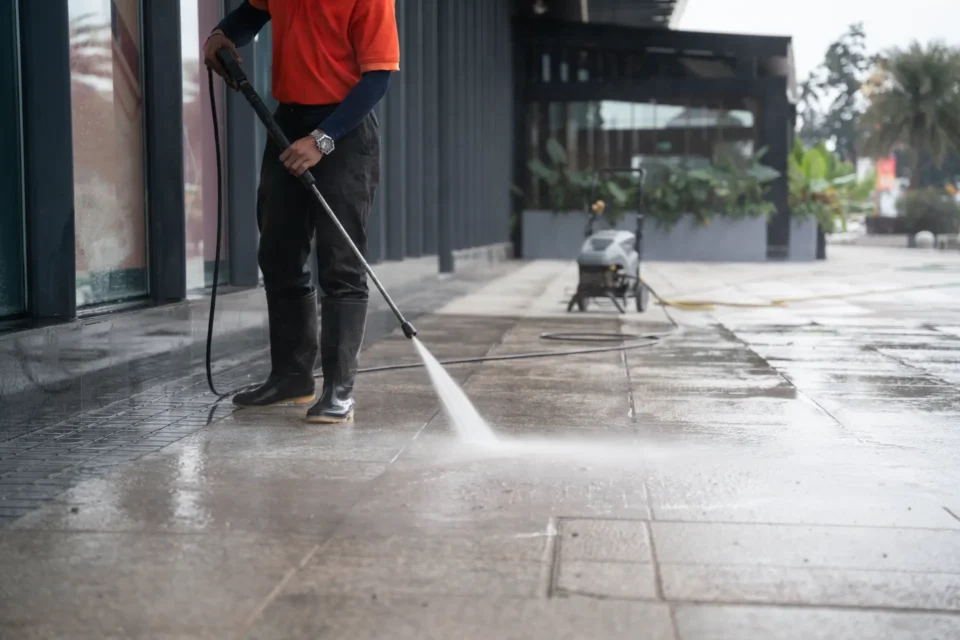
Pressure washing is one of the most effective cleaning methods. But it requires knowledge and technique.
Is It Okay to Pressure Wash Your Garage?
Yes, in many cases it is appropriate.
Pressure washing is effective for:
- Concrete floors
- Driveways
- Parking structures
However, there are important considerations:
- Proper drainage must be in place
- Surfaces must be able to withstand water pressure
- Electrical fixtures should be protected
Safety precautions include wearing protective gear and avoiding high-pressure spray toward sensitive materials.
Will Pressure Washing Damage Concrete?
It can, if done incorrectly.
Using excessive PSI can:
- Etch the surface
- Weaken concrete
- Create uneven textures
Professional cleaners understand PSI guidelines and adjust pressure based on surface condition.
The key is technique, not just power.
Where Should You Not Use a Pressure Washer?
Certain areas should be avoided or approached carefully:
- Electrical panels and outlets
- Weak mortar joints
- Some garage door materials
- Delicate window glazing
Understanding where not to spray is just as important as knowing where to spray.
Equipment and Water Management for Effective Cleaning
Cleaning large parking areas requires the right tools.
Pressure Washing for Detailed Cleaning
Pressure washers allow for:
- Controlled water flow
- Precision cleaning around corners
- Targeted stain removal
They are ideal for detailed work and spot treatment.
Fire Hose Cleaning for Large Areas
For massive commercial structures, fire hose cleaning offers:
- High water volume output
- Rapid coverage
- Effective removal of heavy sludge
The trade-off is reduced precision compared to pressure washing.
Often, a combination of both methods provides the best results.
Water Recovery and Drain Protection
Responsible cleaning includes water management.
Key considerations include:
- Preventing clogged drains
- Protecting stormwater systems
- Ensuring EPA compliance
Wastewater must be handled properly. This is especially important in commercial settings where runoff regulations apply.
Commercial Parking Garage Cleaning Benefits
Commercial properties face higher stakes.
Safer Walking and Driving Surfaces
Removing slippery contaminants reduces accidents and enhances safety for:
- Drivers
- Pedestrians
- Delivery personnel
Environmental Compliance
Proper wastewater management ensures:
- Compliance with local regulations
- Protection of storm drains
- Reduced environmental impact
Protecting Facility Interiors
Clean garages reduce tracked-in dirt and grime, keeping:
- Lobbies cleaner
- Hallways less dusty
- Maintenance costs lower
Residential Garage Cleaning Best Practices
Home garages deserve attention too.
How to Deep Clean a Garage?
A step-by-step approach works best:
- Remove items and declutter
- Sweep or vacuum loose debris
- Apply degreaser to stained areas
- Agitate with a stiff brush
- Rinse or pressure wash carefully
- Allow to dry completely
DIY works for light maintenance. But heavy oil buildup or extensive staining often calls for professional help.
How Often Should You Clean Your Garage?
Frequency depends on:
- Climate
- Usage
- Vehicle traffic
In colder climates, road salt buildup makes seasonal cleaning important. In humid regions, moisture and grime may require more frequent attention.
Cleaning Garage Doors and Windows by Material
Different materials require different care:
- Painted metal: Mild detergent and soft cloth
- Wood: Gentle cleaning to avoid water damage
- Plastic: Non-abrasive cleaners
- Windows: Avoid high pressure directly on seals
Cleaning Garage Floors and Removing Oil Stains
For oil stains:
- Absorb fresh spills with cat litter or baking soda
- Use degreaser and agitation
- Pressure wash concrete floors carefully
Consistency prevents permanent staining.
How to Choose the Right Cleaning Approach for Your Property
Not every space needs a deep clean every time.
Light Maintenance vs. Heavy Buildup
Assess:
- Visible staining
- Surface condition
- Drain functionality
Light buildup may require a rinse. Heavy buildup demands a more aggressive approach.
Commercial vs. Residential Needs
Commercial garages often require:
- Scheduled maintenance plans
- Compliance documentation
- Larger equipment
Residential garages may need occasional deep cleaning.
Questions to Ask Before Hiring a Pressure Washing Company
Consider asking:
- What PSI levels do you use?
- How do you manage wastewater?
- Are you insured?
- Do you offer maintenance plans?
Cleaning as Preventative Maintenance
Cleaning should not be reactive. It should be proactive.
Regular service:
- Extends surface life
- Reduces repair costs
- Improves safety
The same preventative-maintenance mindset applies inside a building too. Understanding the link between HVAC efficiency and clean ducts can help property owners see how routine cleaning in overlooked systems may support better performance and reduce unnecessary strain.
Restore Clean, Safe Surfaces With Power Clean Pressure Washing
Garages and parking structures are often overlooked, but they play a major role in safety, appearance, and long-term property health.
At Power Clean Pressure Washing, we help commercial and residential property owners maintain cleaner, safer spaces through professional-grade equipment and responsible water management.
If your parking garage or residential garage needs attention, do not wait for stains and hazards to build up. Contact Power Clean Pressure Washing today and let us help you protect your property from the ground up.