

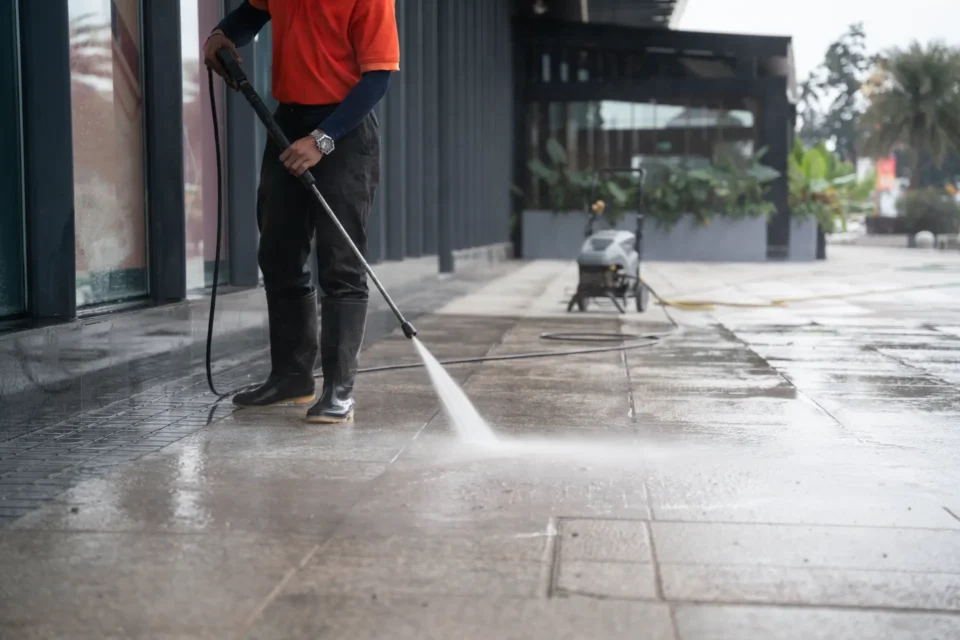
A dirty building sends a message, even if you don’t mean it to. Customers notice stained concrete, grimy walls, and slippery walkways the moment they arrive. And those details can quietly hurt your business.
Skipping pressure washing may seem like an easy way to save money, but it often does the opposite. It can lead to higher repair costs, safety risks, and lost customers.
Let’s take a closer look at the hidden business costs of skipping pressure washing on commercial properties and why staying ahead of the dirt matters more than most owners realize.
What are the Hidden Financial Risks of Ignoring Pressure Washing For Commercial Buildings?
The biggest financial risks tied to skipping pressure washing are the ones that don’t trigger immediate alarms. No one gets a warning email saying, “Your concrete is degrading,” or “Your siding lifespan just shortened.”
The damage happens gradually.
Dirt, mold, algae, grease, and pollutants don’t just sit on surfaces. They interact with them. Over time, that interaction causes deterioration that turns into real financial exposure.
Some of the hidden financial risks include:
- Accelerated surface wear on concrete, brick, and siding
- Premature paint failure and discoloration
- Corrosion of metal fixtures and railings
- Slip-and-fall liability from algae or grease buildup
- Increased insurance scrutiny after incidents
Concrete that stays dirty stays damp. Damp concrete cracks faster. Brick that absorbs pollutants breaks down unevenly. Mold and algae eat away at protective coatings.
Each of these issues chips away at the building’s durability. Not dramatically. Quietly.
And quiet damage is the most expensive kind.
How Can Skipping Exterior Cleaning Affect the Long-Term Value of a Commercial Property?
Commercial properties aren’t valued solely by square footage and location. Condition plays a major role, especially when properties are appraised, refinanced, or prepared for sale.
Pressure washing directly impacts perceived and actual condition.
When exterior surfaces are neglected, appraisers and buyers notice things like:
- Stained sidewalks and entryways
- Discolored siding or brick
- Black streaks on roofing or awnings
- Oil and grease marks in parking areas
- Mold growth around foundations
These issues signal deferred maintenance. Even if the building’s structure is sound, the message is clear. Care has been postponed.
Deferred maintenance lowers value because it increases perceived future costs. Buyers assume they’ll need to spend money correcting what’s visible, and they discount their offers accordingly.
Pressure washing is one of the few maintenance tasks that immediately protects value without major capital investment. Skipping it sends the opposite signal.
Why Does Lack of Pressure Washing Lead to Higher Maintenance Expenses For Businesses?
Neglect doesn’t save money. It delays spending until it’s far more expensive.
Exterior grime accelerates wear. When surfaces break down faster, replacement cycles shorten. That means higher long-term maintenance costs even if short-term budgets look leaner.
Here’s how skipping pressure washing increases expenses:
- Paint jobs fail sooner due to trapped dirt and moisture
- Concrete repairs become necessary earlier than expected
- Sealants and coatings lose effectiveness
- Mold remediation costs rise when growth spreads
- Surfaces require replacement instead of cleaning
A wall that could have been cleaned now needs repainting. A sidewalk that could have been pressure washed now needs patching. A parking lot that could have been degreased now needs resurfacing.
Pressure washing extends the life of surfaces by removing the materials that cause deterioration. Without it, maintenance costs don’t disappear. They multiply.
What Business Problems Can Arise From Poor Curb Appeal Caused By Unwashed Surfaces?
Curb appeal isn’t cosmetic fluff in commercial settings. It’s a business signal.
Customers, tenants, and clients make judgments long before they step inside. Dirty exteriors create doubt about professionalism, safety, and attention to detail.
Poor curb appeal caused by unwashed surfaces can lead to:
- Reduced foot traffic for retail locations
- Lower tenant satisfaction in multi-tenant buildings
- Negative online reviews referencing cleanliness
- Difficulty attracting higher-quality tenants
- Lost trust before the first interaction
People associate cleanliness with competence. A stained sidewalk or moldy façade subconsciously suggests neglect. That perception can affect decisions even when the interior is spotless.
In competitive markets, first impressions are currency. Pressure washing protects that currency.
The Liability Side Most Owners Don’t Consider
One of the most overlooked risks of skipping pressure washing is liability.
Algae, mildew, grease, and grime create slippery surfaces. Entryways, walkways, ramps, and parking areas become hazards over time.
Slip-and-fall claims don’t ask whether dirt seemed harmless. They focus on whether reasonable maintenance was performed.
Unwashed surfaces can:
- Increase accident risk
- Trigger insurance claims
- Raise premiums after incidents
- Create documentation challenges in legal disputes
Pressure washing isn’t just cleaning. It’s risk mitigation.
A single claim can cost more than years of routine exterior maintenance.
Why Exterior Dirt is More Aggressive Than It Looks
Commercial properties face harsher environmental exposure than residential ones. Traffic pollution, industrial residue, grease, salt, and heavy foot traffic all accelerate grime buildup.
That grime isn’t passive.
It:
- Traps moisture against surfaces
- Feeds mold and algae growth
- Breaks down protective coatings
- Stains porous materials permanently
Once staining sets in, cleaning becomes less effective. At that point, cosmetic restoration may require repainting, sealing, or replacement.
Regular pressure washing removes contaminants before they bond with surfaces. Skipping it allows damage to become structural instead of superficial.
Why Businesses Delay Pressure Washing Anyway
Most businesses don’t skip pressure washing because they don’t care. They skip it because it doesn’t feel urgent.
Common reasons include:
- “It doesn’t affect operations today.”
- “We’ll handle it next quarter.”
- “It’s just dirt.”
- “No one has complained.”
The problem is that by the time complaints happen, damage is already advanced.
Pressure washing works best when it’s boring. When nothing looks dramatic because it’s being maintained properly.
Waiting for visible problems defeats the purpose.
How Regular Pressure Washing Changes The Cost Curve
The difference between reactive and proactive maintenance shows up over time.
Regular pressure washing:
- Lowers long-term repair costs
- Extends the lifespan of surfaces
- Preserves property value
- Reduces liability exposure
- Maintains strong curb appeal
Instead of spikes in spending, costs stay predictable. Instead of surprises, maintenance becomes routine.
That stability matters for budgeting and planning.
The Cost Of Catching Up is Always Higher
Once a property falls behind on exterior maintenance, catching up becomes expensive.
Deep staining, embedded mold, and surface damage require more aggressive treatment. Sometimes cleaning alone isn’t enough.
Regular pressure washing keeps properties from reaching that point.
The cost difference between maintaining and restoring is significant.
Dirt Is Never Just Dirt in Commercial Settings
In commercial environments, dirt is a warning sign. It tells a story about maintenance habits, risk tolerance, and attention to detail.
That story affects:
- Customers
- Tenants
- Appraisers
- Inspectors
- Insurers
Skipping pressure washing lets that story get worse over time.
Clean Exteriors are a Business Decision, Not a Cosmetic One
Pressure washing isn’t about aesthetics. It’s about protecting assets.
Every unwashed surface is absorbing damage. Every skipped cleaning cycle shortens lifespan and increases future costs.
The smartest property owners don’t wait for problems. They prevent them quietly.
Protect Your Property Before Dirt Turns Into Damage
At Power Clean Pressure Washing, we help commercial property owners protect value, reduce long-term costs, and maintain professional curb appeal through consistent, strategic exterior cleaning. Our services aren’t about quick shine. They’re about preventing the damage most people don’t see until it’s expensive.
Let’s talk if your property hasn’t been pressure washed recently and you want to avoid the hidden costs of neglect.